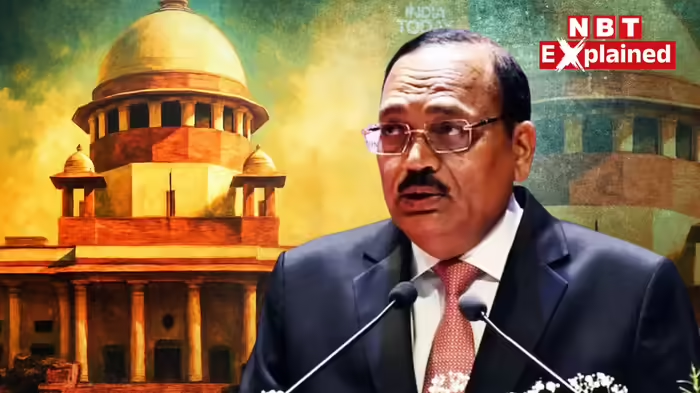
New Delhi: Chief Justice of India (CJI) D.Y. Suryakant delivered a powerful message to young advocates during an honors ceremony organized by the Delhi Bar Council at the Delhi High Court premises. Emphasizing the importance of district courts, he urged budding lawyers to begin their practice at the grassroots level before aspiring to appear in High Courts or the Supreme Court.
CJI Suryakant Highlights a Common Misconception
Justice Suryakant noted a prevalent misconception among young lawyers—that after graduating from premier law universities such as the National Law Universities (NLUs), they should directly practice in High Courts or the Supreme Court. He stressed that district courts are the foundation for building professional skills and a robust legal career. “We must encourage young and aspiring lawyers to understand the significance of practicing in district courts before moving to higher forums,” he said.
Reflecting on His Early Legal Journey
Recalling his own early days as a junior, CJI Suryakant said he was fortunate to work under a senior civil lawyer who guided him in drafting petitions, pleadings, affidavits, and preparing for cross-examinations. He attributed much of his professional success to the skills he acquired in district courts. After completing a year of juniorship, he ventured into independent practice, and even senior lawyers sought his assistance in preparing petitions, owing to the expertise he had gained.
Where Real Justice Happens
CJI Suryakant emphasized that true justice is rooted in grassroots courts. “A client’s first encounter with the legal system occurs in district courts, where rights are enforced and the law takes a tangible, human-centered form,” he said. According to him, district courts play an equal, if not greater, role than appellate courts in delivering practical justice.
District Courts as Primary Health Centers of Justice
Drawing a metaphor, CJI Suryakant compared district courts to primary health centers. “If a litigant receives satisfactory redress here, there is no need for transfer to a major hospital or a trauma center,” he explained, highlighting the critical role of these courts in the legal ecosystem.
Preserving the Art of Cross-Examination
The Chief Justice also voiced concern over the decline of cross-examination skills due to technological advancements. He urged senior lawyers to impart their expertise to juniors, ensuring that this essential aspect of advocacy is preserved.
The ceremony was attended by judges from the Supreme Court and Delhi High Court, along with senior advocates and office-bearers of the Bar Council of India and Delhi, including Manan Kumar Mishra, Chetan Sharma, Maninder Singh, Vikas Singh, and N. Hariharan.
Discover more from SD NEWS agency
Subscribe to get the latest posts sent to your email.