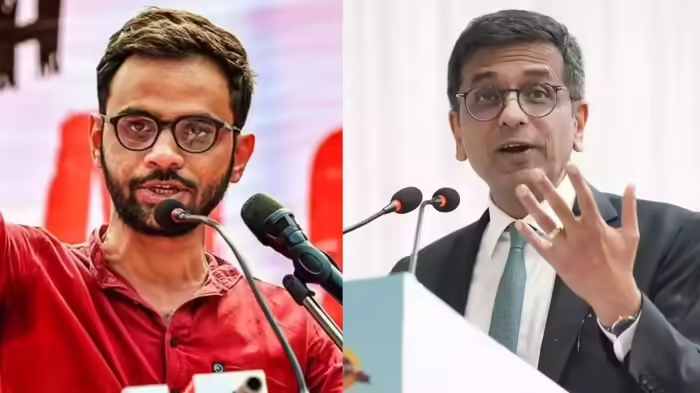
New Delhi: Former Chief Justice of India DY Chandrachud has strongly reiterated that pre-conviction bail is a fundamental right of every citizen, in the context of the Supreme Court’s refusal to grant bail to Umar Khalid, accused in the Delhi riots case. Speaking at an event in Jaipur, Chandrachud warned that prolonged imprisonment without trial undermines constitutional justice and highlighted the urgent need for safeguards ensuring timely hearings.
Bail Should Be the Rule, Not the Exception
Chandrachud said, “Umar Khalid has been in jail for five years. I am not criticizing the court… Bail conditions can be imposed to prevent misuse, but it is essential that the accused has the right to a speedy hearing. If immediate hearings are not possible due to current circumstances, bail must be the rule, not the exception.”
During his 24-month tenure as CJI, he added, the bench disposed of over 21,000 bail petitions. He pointed out that many cases are overlooked when critics focus on instances where the Supreme Court denies bail, stressing the importance of context and the rule of law.
When Bail Can Be Denied
The former CJI explained that bail may be refused in cases where there is a risk of re-offending, tampering with evidence, or attempting to evade the law. However, if none of these conditions exist, bail must be granted. He emphasized that in matters concerning national security, courts have a duty to carefully examine the case to prevent individuals from being jailed for years without due process.
Delays in Judicial Process a Serious Concern
Chandrachud expressed concern over delays in the Indian criminal justice system, particularly when lower courts and sessions courts fail to grant timely bail. He noted that such delays erode public trust and create fear among judges about potential scrutiny of their decisions. He added that these challenges often lead to bail matters being escalated to the Supreme Court.
His remarks underscore the importance of upholding constitutional rights, ensuring timely justice, and balancing public safety with individual liberties in the criminal justice system.
Discover more from SD NEWS agency
Subscribe to get the latest posts sent to your email.