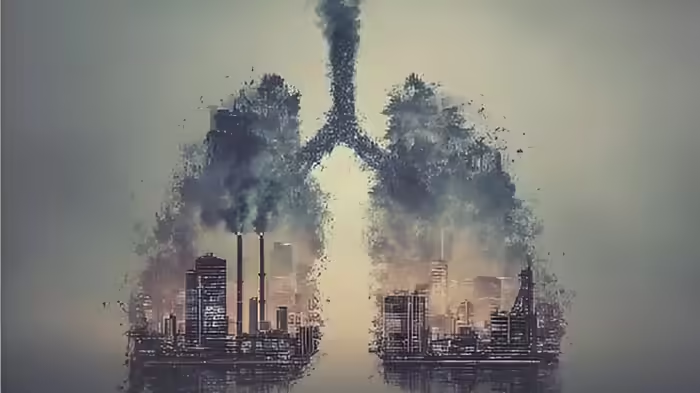
Mumbai: While air pollution has long plagued Delhi-NCR, Mumbai is now beginning to face a similar crisis. Once considered relatively safe due to its coastal winds, the city’s air quality has started showing worrying signs, raising alarms for public health and governance.
Mumbai’s Rising Pollution Levels
In November, Delhi’s Air Quality Index (AQI) exceeded 300 on 24 days, with three days crossing 400 — classified as “severe.” Now, Mumbai too is seeing AQI readings around 150, categorized as “unhealthy for sensitive groups.” Coastal winds that once helped disperse pollutants are no longer sufficient to keep the air clean. Experts warn that without strong policy intervention, the situation could deteriorate rapidly.
Main Causes
Mumbai’s worsening air quality stems from three primary sources:
- Vehicular emissions – The city’s growing vehicle population, traffic congestion, and inadequate last-mile connectivity in public transport contribute heavily.
- Industrial activities – Small and medium industries in Navi Mumbai, Taloja, and other areas continue to rely on outdated, high-pollution technologies.
- Construction dust – Massive projects like Metro, Coastal Road, and Trans-Harbour Link create enormous amounts of dust, especially during excavation and material transport. Poor dust management has caused PM10 levels to spike, making nearby areas pollution hotspots.
Cross-Border Pollution
Winter months exacerbate the problem as smoke and dust from crop residue burning in Gujarat and Madhya Pradesh travel to Mumbai, further worsening air quality. Experts stress the need for inter-state coordination and a unified air-shed management strategy to tackle seasonal pollution spikes.
Steps Taken and Gaps
Municipal authorities have initiated measures like street cleaning, water sprinkling, anti-smog guns, and covering construction materials. While necessary, enforcement is inconsistent and often weak.
Urgent Policy Measures Needed
Experts call for:
- A strict dust control policy integrated into city bylaws.
- Real-time monitoring and active involvement of Municipal Corporations, PWD, Transport, Police, and other departments.
- Dedicated Dust Mitigation Cells under the National Clean Air Program (NCAP) to ensure accountability.
Pollution Is a Governance Issue
Air pollution is not just an environmental problem; it is a matter of governance and public accountability. A strong authority or task force should coordinate all departments, involving state government, municipal bodies, scientists, health experts, and citizen groups. Currently, fragmented responsibilities result in poor enforcement.
Balancing Development and Health
Legal accountability and stricter penalties are essential. Rules like halting construction during high AQI days, banning open burning of waste, and rigorous industrial monitoring should be enforced without compromise. The focus is not on halting development but ensuring health-friendly growth. Proper planning, strict enforcement, and technology-driven solutions can quickly improve air quality, ensuring healthier citizens, lower medical costs, and a better urban environment.
Discover more from SD NEWS agency
Subscribe to get the latest posts sent to your email.