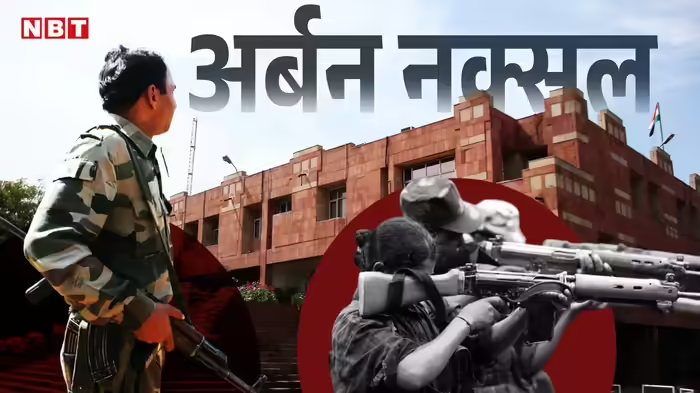
The Union Government has set March 31, 2026 as the deadline to declare India free from Left‑Wing Extremism (LWE), and officials are confident the target will be met on time. Even as the final phase of operations against rural Naxalism continues, the government has already prepared a comprehensive post‑Naxal roadmap, with a strong focus on dismantling what it describes as the “Urban Naxal ecosystem.”
According to senior officials, a 10‑point action plan has been finalised to ensure that areas liberated from Maoist influence do not relapse into violence and ideological extremism. A key pillar of this plan is the identification, monitoring, and neutralisation of urban‑based networks believed to provide ideological, logistical, and financial support to Naxal groups.
Post‑Naxal India: The Next Phase
As per a report by The Economic Times, once the government formally announces a Naxal‑free India on March 31, 2026, a simultaneous push will begin to consolidate peace through development, governance reforms, and security restructuring in former conflict zones.
The roadmap also includes changes in security deployment, with a gradual transition of responsibility from Central Armed Police Forces (CAPFs) to state police, backed by long‑term peace‑building mechanisms.
Roadmap Shared at Chief Secretaries’ Conference
The 10‑point strategy was presented by the Ministry of Home Affairs at a recent Chief Secretaries’ Conference, chaired by Prime Minister Narendra Modi in December. The framework identifies five core challenges in post‑Naxal regions—developmental deficit, lack of education, livelihood insecurity, weak governance, and ideological infiltration.
While most measures focus on socio‑economic upliftment, officials say curbing Urban Naxalism is one of the most critical objectives, as these networks are seen as sustaining the Maoist movement from within cities.
Focus on Development of Former Naxal Hotspots
The government will initially prioritise 38 identified districts that remained underdeveloped due to prolonged Maoist violence. The aim is to ensure time‑bound implementation of all 137 central government schemes in these districts using modern technology and direct monitoring.
A dedicated livelihood action plan is also in place, with the ambitious target of raising monthly household incomes to ₹25,000–₹30,000 in these regions.
Governance Reforms and Community‑Led Development
A major overhaul of the governance model is planned. This includes:
- Strengthening local administration
- Timely conduct of elections
- Empowerment of women, youth, and tribal communities
- Rehabilitation and welfare schemes for former Naxals and victims of violence
The government believes community ownership and inclusive leadership are essential for sustaining long‑term peace.
What the Government Plans for ‘Urban Naxals’
Under the post‑LWE roadmap, the government has identified the elimination of the Maoist support ecosystem, including “separatist and subversive elements,” as a key mission.
Security agencies believe such groups have established deep roots within urban institutions, academic circles, civil society fronts, and advocacy organisations. The strategy includes:
- Enhanced surveillance
- Faster investigation and prosecution
- Identification and banning of front organisations
- Disruption of funding and propaganda networks
Officials say the focus will be on legal, intelligence‑based, and institutional action to prevent the re‑emergence of Left‑Wing Extremism in any form.
From Counter‑Insurgency to Consolidation
With Naxalism nearing its end as an armed insurgency, the government’s strategy marks a shift from counter‑insurgency operations to ideological and governance consolidation, aimed at ensuring that extremism does not re‑enter India through urban channels.
Discover more from SD NEWS agency
Subscribe to get the latest posts sent to your email.