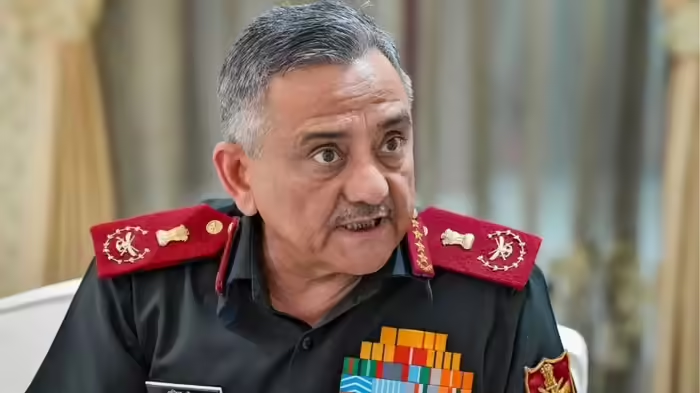
New Delhi: In the aftermath of Operation Sindoor, launched by India following terrorist attacks in Pahalgam, Pakistan faced significant setbacks, forcing it to implement both military and constitutional amendments, according to India’s Chief of Defence Staff, General Anil Chauhan.
Speaking at the Pune Public Policy Festival 2026, organized by the Gokhale Institute of Politics and Economics (GIPE), Gen. Chauhan stated that the operation compelled Islamabad to restructure its higher defence organizations and make rapid constitutional changes—a clear sign that the operation did not go in Pakistan’s favour.
Key Changes in Pakistan’s Military Structure
Gen. Chauhan explained that Pakistan abolished the post of Chairman of the Joint Chiefs of Staff Committee and created the position of Chief of Defence Forces. Additionally, the country established the National Strategy Command and the Army Rocket Forces Command. These steps indicate Pakistan’s attempt to centralize strategic military powers under a single authority—a move contrary to traditional principles of decentralized command. He warned that such centralization could create internal challenges within Pakistan’s military system.
India’s Command Structure Remains Robust
Responding to questions about whether Operation Sindoor influenced India’s command structure, Gen. Chauhan clarified that while the CDS does not exercise direct command over all three service chiefs, the position ensures collective decision-making, integrated planning, and execution. The CDS also oversees emerging operational domains, including space, cyber, electromagnetic, and cognitive warfare, along with special forces under the Integrated Defence Staff.
Global Shift in Military Strategy
Gen. Chauhan highlighted a paradigm shift in global military strategy, where technology, not geography, drives warfare. Historically, battles from Panipat to Plassey were defined by terrain, but today, technological superiority dictates operational success. He warned that future conflicts are likely to see increased use of contactless and non-lethal methods.
Lessons from Past Operations
Reflecting on operations like Uri surgical strikes, Doklam standoff, Galwan clash, Balakot air strike, and Operation Sindoor, Gen. Chauhan noted that India has consistently adapted its command structures innovatively to match situational demands. He emphasized that a standardized command system is now being developed to respond effectively in all emergency scenarios. The CDS added that most groundwork for the Joint Theatre Command has been completed, and the Integrated Command Structure is expected to be operational ahead of schedule.
Discover more from SD NEWS agency
Subscribe to get the latest posts sent to your email.