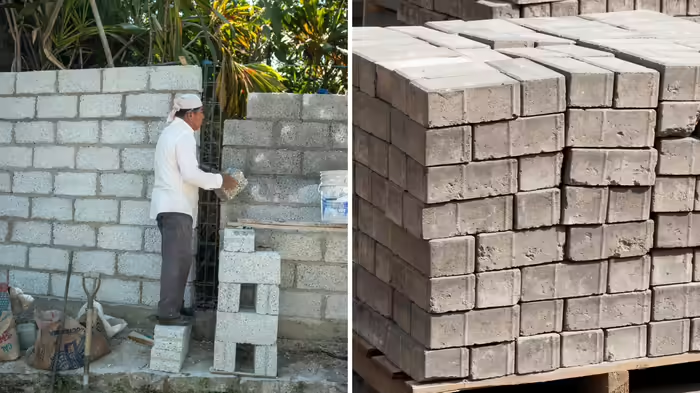
With construction costs rising, homeowners are increasingly seeking durable yet budget-friendly alternatives to traditional red bricks. Fly ash bricks are emerging as a preferred option—not only for their cost-effectiveness but also for their environmental benefits. Civil engineer Arpit Mishra highlights the advantages and considerations of using fly ash bricks.
What Are Fly Ash Bricks?
Fly ash bricks are primarily made from industrial waste like coal ash, mixed with sand and cement. Unlike red bricks, which require fertile soil and kiln firing, fly ash bricks are manufactured using hydraulic pressure machines. This results in precise, uniform sizes, reducing material wastage and labor costs during construction.
Strength and Durability
According to Arpit Mishra, fly ash bricks are stronger than conventional red bricks, reducing the risk of breakage during transport or construction. They also resist efflorescence (white patches) and absorb very little moisture, preventing dampness and water-related damage in walls.
Significant Cost Savings
- Mortar Savings: Uniform brick size means less mortar is needed.
- Reduced Labor: Larger size covers more area, saving construction time.
- Lower Price: Fly ash bricks cost roughly 30% less than red bricks. Additionally, they do not require soaking in water before use, saving both time and water.
Thermal Insulation and Load Management
Fly ash bricks help keep interiors cooler during hot weather, as they absorb less heat from outside. Their lighter weight reduces the dead load of structures, making them ideal for multi-storey buildings. They also offer good sound insulation, adding to the comfort of living spaces.
Environmentally Friendly
Fly ash bricks are considered a green product. They do not use fertile soil, nor do they require kilns for firing, which reduces environmental pollution. Moreover, they utilize industrial waste, contributing to effective waste management.
Considerations and Limitations
- Bonding Issues: Smooth finish may weaken adhesion with concrete or plaster; small grooves on bricks can improve bonding.
- Quality Concerns: Bricks with incorrect proportions or insufficient cement may crumble easily.
- Plaster Limitations: Direct gypsum plastering is difficult without a lime coating.
- Cold Weather: While excellent for heat insulation, fly ash bricks do not absorb sunlight as efficiently as red bricks, which may affect warmth during winters.
Availability
Fly ash bricks are now widely available in small towns and cities, making them a convenient option for modern construction.
In conclusion, fly ash bricks provide a strong, cost-effective, and environmentally responsible alternative to traditional red bricks, making them ideal for homeowners looking to balance durability, budget, and sustainability.
Discover more from SD NEWS agency
Subscribe to get the latest posts sent to your email.