
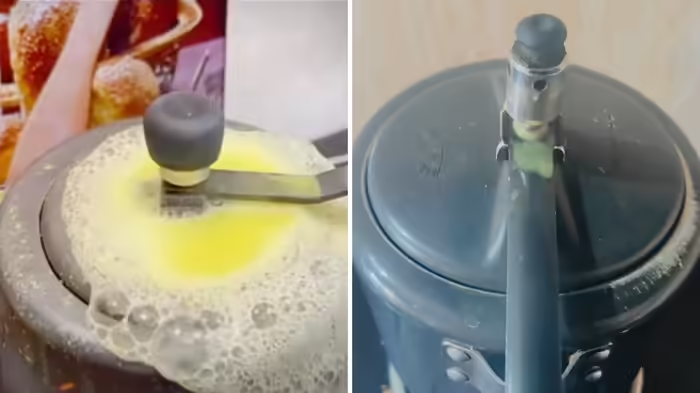
In almost every Indian household, the pressure cooker is a daily essential. Yet, one common complaint continues to trouble everyone—water or foam spilling out from the whistle during cooking. It messes up the gas stove and can even affect the nutritional quality of food.
But according to content creator Vedant Singh, preventing this is neither difficult nor time-consuming. With one basic kitchen ingredient and a few mindful steps, you can completely stop water from escaping through the cooker whistle.
1. Add a Spoon of Ghee or Oil
Vedant Singh’s first tip is remarkably simple:
Add one spoon of ghee or oil to the cooker whenever you cook dal, rice, or anything that produces foam.
Why it works:
Ghee or oil reduces the surface tension of water. When dal or rice boils, the bubbles formed on the surface break quickly because of the greasy layer. This prevents foam from stabilising and rising toward the whistle.
As a result, the water droplets burst before reaching the nozzle, stopping overflow completely.
2. Never Overfill the Cooker
After adding oil or ghee, another critical rule is to fill only two-thirds of the cooker’s total capacity.
Dal and rice expand while cooking and need space for steam and foam to build and break.
Leaving this empty space ensures the foam never reaches the whistle chamber.
Bonus Tips for Cleaner, Hassle-Free Pressure Cooking
Apply a Lemon Piece on the Lid
Before closing the cooker, place a small piece of lemon peel or a lemon slice inside if you’re cooking dal or chickpeas.
The citric acid destabilises foam formation, further preventing overflow.
If water leaks from the sides instead of the whistle, it indicates the gasket has loosened.
A thick rubber band around the gasket can temporarily fix the issue.
Maintain the Correct Water Ratio
Incorrect water measurements often lead to excessive foaming.
- For 1 cup dal: 3 to 3.5 cups water
- For lighter dals like moong: less water is needed
- For 1 cup rice: 1.5 to 2 cups water is ideal
Less water means less foaming and fluffier rice.
Monitor the Flame
Cooking on high flame throughout is a major reason for spillage.
- Start on high flame until the first whistle
- Once pressure builds, reduce to medium or low flame
This maintains pressure without forcing foam toward the whistle.
Disclaimer
The tips and claims in this article are based on an Instagram video and online sources. Navbharat Times does not take responsibility for accuracy or effectiveness. For kitchen safety and appliance concerns, consult product guidelines or experts.
Discover more from SD NEWS agency
Subscribe to get the latest posts sent to your email.