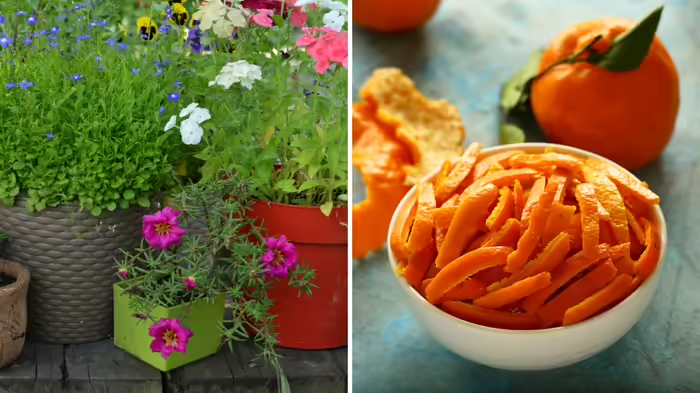
Discarding fruit and vegetable peels may seem harmless, but according to gardening expert Praveen Mishra, throwing away orange peels is a missed opportunity. Rich in nitrogen, potassium, and phosphorus, orange peels can transform soil health in ways that even expensive chemical fertilizers often fail to achieve.
Mishra demonstrates how orange peels can be converted into a powerful bio-enzyme that accelerates plant growth, improves soil fertility, and protects plants from pests — all using simple household ingredients. The method, shared via a gardening tutorial platform, promotes sustainable waste management while offering an affordable alternative to commercial fertilizers.
Ingredients
- 2-liter plastic bottle
- 300 grams orange peels
- 100 grams jaggery
- Water
Preparation Method
Place the orange peels inside a plastic bottle and add jaggery in a measured quantity. Fill the bottle with water only up to 80 percent capacity, leaving the remaining space for gas formation during fermentation. Shake well to mix.
Seal the bottle and store it in a safe corner, preferably on a terrace or ventilated area. Label the bottle with the date and allow it to ferment for 90 days. During this period, gas will build up inside. It is essential to release the gas at intervals — after 2 days, 4 days, 8 days, and 16 days — and periodically afterward to prevent pressure buildup. Experts warn against piercing the lid; instead, gently open and reseal it.
If leaving home for an extended period, keep the lid slightly loose so gas can escape naturally.
After Fermentation
Between 90 and 120 days, the pulp will settle at the bottom. Strain the mixture using a double-layer cloth. The solid residue can be mixed into potting soil, while the liquid enzyme should be stored carefully, continuing to release any accumulated gas.
For use, dilute 5–10 ml of the bio-enzyme in one liter of water. It can be poured directly into the soil or sprayed onto leaves every 20–22 days.
Benefits of Orange Peel Bio-Enzyme
- Enriches soil fertility and accelerates plant growth
- Repels ants and harmful insects with its natural aroma
- Supplies essential nutrients that keep leaves healthy and green
- Helps prevent plant diseases and fungal infections
- Reduces household waste while providing cost-free organic fertilizer
The method highlights how everyday kitchen waste can be repurposed into an eco-friendly gardening solution — turning scraps into sustainability.
Discover more from SD NEWS agency
Subscribe to get the latest posts sent to your email.