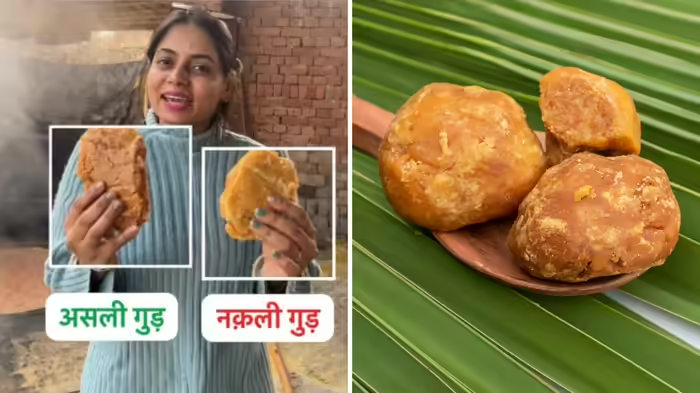
Jaggery is widely known as one of the healthiest natural sweeteners in Indian kitchens and Ayurveda. Rich in iron, magnesium, potassium, and packed with natural warmth, it becomes especially beneficial during winter. But increasing adulteration in the market has made pure jaggery difficult to find.
Gardening and natural-living expert Anju Singh explains how anyone can easily identify real, chemical-free jaggery and avoid harmful adulterated varieties.
Colour & Shine: The First Indicator
Pure jaggery, made without chemicals, appears deep brown, dark red, or nearly black.
This is because impurities in sugarcane juice don’t get fully removed during natural processing, giving it a darker tone due to natural caramelisation.
Fake or chemically processed jaggery usually looks:
- Light brown, golden, or unusually pale
- Extra shiny
- Polished or artificially attractive
This appearance is often achieved using chemicals like sodium hydrosulfite, a bleaching agent.
Singh advises choosing jaggery that appears dark, slightly rough, and uneven (“papdi-type”), rather than shiny.
Texture & Stickiness: Hold It to Know the Truth
Simply holding the jaggery in your hand can reveal its quality.
Pure jaggery:
- Hard and firm
- Breaks into flakes or chunks with effort
- Feels grainy when rubbed
- Not sticky
Adulterated jaggery:
- Soft and sticky to touch
- Breaks too easily
- Feels oily or overly smooth due to added chemicals
- Melts quicker
Excess moisture and chemical agents cause fake jaggery to soften unnaturally.
Taste Test: Not Just About Sweetness
Authentic jaggery has:
- A balanced, moderate sweetness
- A hint of natural saltiness
- A mild caramel or earthy aftertaste
- A natural sugarcane aroma
Fake jaggery often tastes:
- Extra sweet
- Slightly bitter
- Salty (sign of chemical purification)
- Artificially flavoured
Any bitterness or chemical-like aftertaste is a clear red flag.
Water Test: The Easiest Home Method
Dissolving jaggery in water can instantly show purity.
Pure jaggery:
- Dissolves slowly
- Does not release oil, bubbles, or foam
- May leave some natural residue at the bottom
- Turns the water a natural golden-brown
Adulterated jaggery:
- Dissolves very quickly
- Leaves chalk, powder, or white sediment
- May create bubbles or surface residue
If the water becomes cloudy or chalky, the jaggery is impure.
Aroma Check: Trust Your Nose
Pure jaggery carries the strong, natural fragrance of sugarcane juice.
Chemically treated jaggery:
- Has no aroma
- Or emits a faint chemical smell
Bleaching and processing strip it of its natural scent.
Final Advice
Do not judge jaggery by its beauty.
Real jaggery looks rustic, uneven, and naturally dark—not shiny or perfect.
Disclaimer: The methods and claims in this article are based on information shared through Instagram videos and general internet sources. Navbharat Times does not verify their scientific accuracy.
Discover more from SD NEWS agency
Subscribe to get the latest posts sent to your email.