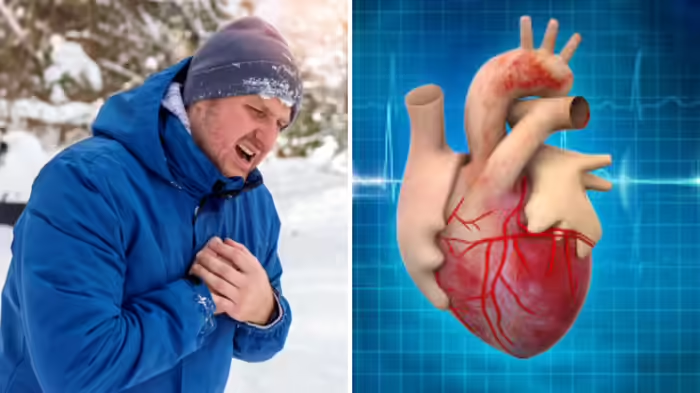
Heart disease remains the leading cause of death worldwide, with heart attacks topping the list. During winter months, cases of heart attacks tend to rise, and doctors say there are several scientific reasons behind it. Cold temperatures put sudden stress on the body, particularly affecting the heart and blood circulation.
According to Dr. Sanjeev Gera, Senior Director and Head of Cardiology at Fortis Hospital, Noida, “In winter, blood pressure can rise sharply. Cold causes blood vessels to constrict, slowing blood flow and increasing pressure on the heart. For someone with even minor arterial blockages, this sudden increase can trigger a heart attack.”
Why cold weather increases heart attack risk
1. Blood vessels constrict
In cold temperatures, the body narrows blood vessels to conserve heat, which increases blood pressure and forces the heart to work harder.
2. Increased platelet activity
Platelets become more active in cold weather, a phenomenon called platelet aggregation. This makes blood clot more easily, increasing the risk of blockages. If a clot forms in the heart artery, a heart attack can occur.
3. Artery spasms and reduced blood flow
Extreme cold can cause extremities to turn blue due to artery spasms, which restrict blood flow. If a person already has arterial blockages, this further narrowing significantly raises the risk of a heart attack.
4. Sudden heavy exercise
Engaging in strenuous exercise in cold weather—especially after a long period of inactivity—can shock the heart. For example, lifting heavy weights early in the morning in freezing conditions can combine with high blood pressure and arterial blockages to create a dangerous situation.
Pollution adds to the risk
Winter often brings higher levels of smog and pollution, which can thicken the blood and increase artery spasms. For individuals with diabetes, hypertension, or heart disease, the combined risk is even higher.
Tips to protect your heart in winter
- Cover up properly before stepping out in cold weather.
- Warm up with hot drinks or food before heading outside.
- Keep the body warm and stay hydrated.
- Avoid extreme exercise in very cold conditions.
Warning signs of a possible heart problem
Dr. Gera advises that even if blood pressure readings are normal, watch for:
- Unexplained fatigue or weakness
- Shortness of breath or sweating
- Anxiety or a feeling of unease
- Nausea or vomiting sensations
Women may experience atypical symptoms
Women often show different symptoms, such as severe fatigue, irritability, anxiety, nausea, or uneasiness. Chest pain may not always be present, but the body can signal heart distress in other ways.
Chest heaviness on exertion is a major indicator
One common sign is a sensation of heaviness or pressure in the chest when walking or moving, which may radiate to the shoulder, arm, neck, jaw, or even ears. Smokers or sedentary individuals should never ignore such signals.
Angina: A warning of pre-heart attack
Pain that occurs during activity but subsides at rest is called angina, indicating that the heart is not receiving enough blood during exertion. Ignoring these warning signs can lead to complete blockage and a full-blown heart attack.
Disclaimer: This article is for general information only and does not replace professional medical advice. For concerns, always consult your doctor.
Discover more from SD NEWS agency
Subscribe to get the latest posts sent to your email.