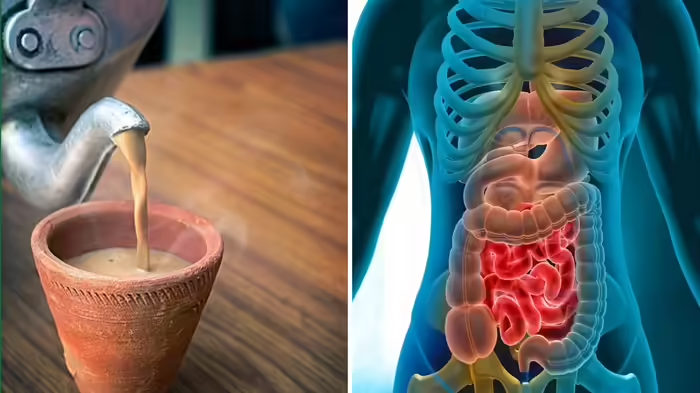
Hot tea and coffee are a staple of daily life, whether it’s to kickstart the morning or take a break during work. But recent scientific research warns that drinking extremely hot beverages could increase the risk of throat cancer. The danger lies not in the type of drink—tea, coffee, or milk—but in the temperature at which it is consumed.
The Study and Its Findings
Researchers from the US National Cancer Institute and the London Institute of Cancer Research have issued a strong warning: people who drink very hot tea or coffee regularly are at a higher risk of developing a specific type of throat cancer known as esophageal squamous cell carcinoma (ESCC), which affects the esophagus.
Published in the British Journal of Cancer, the study tracked nearly 450,000 people under the UK Biobank for over 10 years. The findings revealed that drinking excessively hot beverages is a significant risk factor for ESCC.
Risk Increases with Cups and Temperature
The research showed that individuals consuming more than eight cups of very hot tea or coffee daily had a 5.64 times higher risk of developing ESCC compared to those who preferred their beverages warm or lukewarm. Risk increased with each additional cup, and extremely hot drinks further accelerated this danger. Over an 11.6-year period, among 455,000 participants, 242 cases of ESCC were recorded.
Temperature Matters More Than the Type of Drink
Importantly, the study emphasized that the risk is linked to the temperature, not the beverage itself. Tea, coffee, or milk-based drinks posed similar risks when consumed very hot.
Global Relevance
While ESCC is generally rare, the study shows that even in Western countries like the UK, drinking very hot beverages can increase the risk. These findings align with previous research conducted in South America and Asia. The International Agency for Research on Cancer (IARC) has already issued warnings regarding very hot drinks.
Practical Advice
Scientists recommend allowing hot beverages to cool slightly before drinking. Doing so can significantly reduce the risk of ESCC while still enjoying the health benefits of tea and coffee. They caution against changing one’s entire diet based on fear from a single study, advising moderation and awareness instead.
Disclaimer: This article is for general information only and is not a substitute for professional medical advice. For personalized guidance, always consult a qualified doctor.
Discover more from SD NEWS agency
Subscribe to get the latest posts sent to your email.