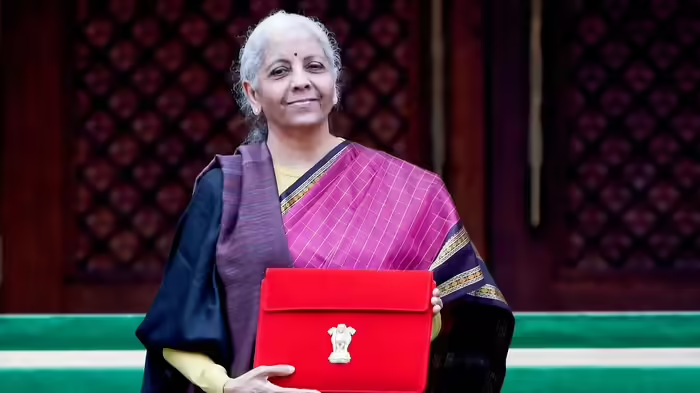
Whenever Finance Minister Nirmala Sitharaman presents the Union Budget, attention extends beyond policy announcements to her choice of attire — a consistent celebration of India’s textile heritage. Presenting Budget 2026, her ninth budget in office, Sitharaman appeared in a striking Kattam Kanjivaram silk saree, a weave rooted in nearly 400–500 years of history.
Her understated yet elegant look once again highlighted a preference for tradition over trend, reinforcing her reputation for honoring Indian craftsmanship on one of the country’s most watched political stages.
The Significance of the Kattam Kanjivaram
Unlike a conventional Kanjivaram saree, Sitharaman chose a Kattam Kanjivaram — a distinctive variation woven in Tamil Nadu’s silk city, Kanchipuram. The word Kattam comes from Tamil and refers to a checkered or square pattern. These geometric checks are not printed but intricately woven into the fabric using colored threads, reflecting the precision of traditional handloom techniques.
Details of the Saree
The Finance Minister wore a magenta silk saree featuring gold-thread square motifs spread across the body. A coffee-brown border enriched with gold zari work added depth and contrast, lending the ensemble a classic finish. Styled with broad pleats and a structured drape, the saree embodied simplicity paired with quiet luxury.
Instead of a matching blouse, Sitharaman opted for a contrasting yellow full-sleeved blouse with a round neckline, complementing the gold accents of the border while adding brightness to the palette. A shawl draped over one shoulder completed her signature minimalist look.
Craftsmanship Rooted in Precious Materials
Authentic Kattam Kanjivaram sarees are crafted from pure mulberry silk and traditionally feature zari woven from real gold and silver threads. The zari work, often highlighted on borders, elevates the richness of the weave. While classic Kanjivaram sarees are known for motifs inspired by temples, parrots, and florals, the Kattam style is defined by geometric checks — a visual identity that sets it apart.
A Legacy of 400 Years
The origins of Kanchipuram silk weaving date back four to five centuries. Historical accounts credit the Devanga and Saliyar weaving communities with developing the craft, linking their lineage to the sage Markandeya, revered in mythology as the divine weaver of the gods.
During the Chola and Pallava dynasties, royal patronage helped the art flourish. Once reserved for royalty and temple deities, these sarees have since evolved into a symbol of South Indian cultural pride and are now embraced across generations.
Sitharaman’s choice this year was more than a fashion statement — it was a tribute to a living tradition that continues to define India’s textile identity.
Discover more from SD NEWS agency
Subscribe to get the latest posts sent to your email.