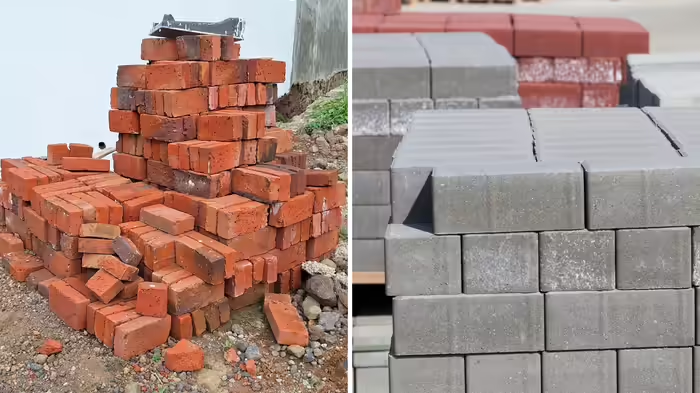
Selecting the right bricks is one of the most crucial decisions when building a home, as both the strength of the structure and the budget largely depend on it. Traditionally, red clay bricks have been widely used. However, modern engineering experts now recommend fly ash bricks as a stronger and more durable alternative.
Building a new home is everyone’s dream, but cost considerations often come first. At this stage, the question arises: should one use red clay bricks or fly ash bricks? While red bricks have been in use for generations, civil engineer Mukesh Bhusare suggests that fly ash bricks are emerging as a superior and cost-efficient option.
Cost and Savings
Fly ash bricks prove to be more economical in the long run. Although their per-brick cost is comparable to red bricks, they require less mortar, reduce plaster usage, and result in minimal wastage. According to engineers, choosing fly ash bricks can lead to significant overall savings in construction costs.
Strength and Durability
Compressive strength is critical in any construction. Fly ash bricks are stronger than red clay bricks. While red bricks often fail to achieve uniform strength during kiln firing, fly ash bricks are machine-made, ensuring consistent load-bearing capacity.
Moisture Resistance
Red clay bricks tend to absorb moisture, which can lead to dampness and plaster damage. In contrast, fly ash bricks are denser and become even stronger over time, providing long-lasting structural stability.
Water Absorption
Red bricks absorb a considerable amount of water, weakening plaster over time. Fly ash bricks, on the other hand, absorb minimal water, keeping plaster intact and reducing the risk of dampness in walls.
Reduced Wastage
Brick breakage during transportation or handling leads to material loss. While about 10% of red bricks may get damaged, fly ash bricks have a breakage rate of just around 5%, meaning fewer bricks are needed, saving both money and resources.
Smooth Finish
Red bricks often have irregular shapes, resulting in uneven wall surfaces that require additional mortar and thick plaster. Fly ash bricks are precision-molded, producing smooth surfaces and reducing plaster and finishing costs.
Environmental Impact
Red brick production consumes fertile soil and emits smoke from kilns, contributing to pollution. Fly ash bricks, made from the ash of thermal power plants, conserve soil and are eco-friendly with minimal air pollution.
Engineer’s Recommendation: For a strong, durable, cost-effective, and environmentally friendly construction, fly ash bricks are the preferred choice over traditional red clay bricks.
Disclaimer: The information in this article is based on publicly available sources, including YouTube and online references. The publisher does not guarantee the accuracy or authenticity of the claims.
Discover more from SD NEWS agency
Subscribe to get the latest posts sent to your email.