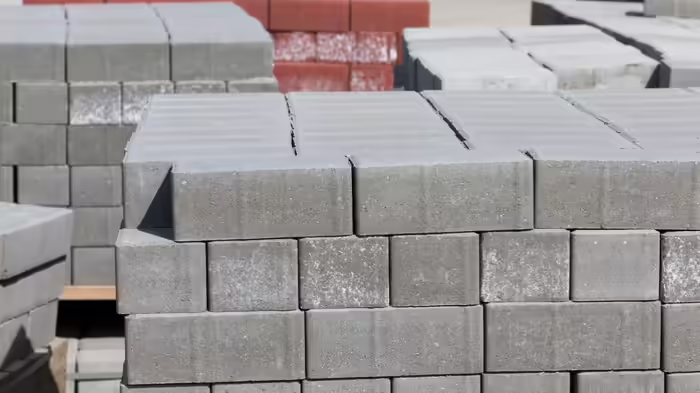
With the rising cost of sand and cement, AAC (Autoclaved Aerated Concrete) blocks are emerging as a practical option for building homes. According to civil engineer Anjani Kumar, these blocks not only speed up construction but also significantly reduce overall costs.
What Makes AAC Blocks Special?
AAC blocks resemble cement stones with an exceptionally smooth surface. Made from a mixture of fly ash, cement, lime, and aluminum powder, these blocks are lightweight and provide excellent thermal insulation. Their smooth surface requires minimal plastering, or even just putty, leading to substantial savings on sand and cement.
AAC Block Prices in 2026 (Based on Size)
Market demand and advancements in construction technology have influenced the pricing of AAC blocks. Civil engineer Anjani Kumar shared the approximate prices for different sizes:
- 3×8×24 inches: ₹28 – ₹32 per block
- 4×8×24 inches: ₹38 – ₹45 per block
- 6×8×24 inches: ₹55 – ₹60 per block
- 8×8×24 inches: ₹75 – ₹80 per block
Note: Prices may vary based on location and transportation. Buyers are advised to check rates at multiple suppliers before purchasing.
Recommended Sizes for Different Walls
- External walls: 8×8×24 or 9×8×24 blocks are ideal for better protection against heat, noise, and rain.
- Internal walls: 4×8×24 or 6×8×24 blocks work well for interior partitions, saving space and reducing building weight.
- Partitions/boundaries: 3×8×24 blocks can be used where walls do not bear heavy loads.
How to Join AAC Blocks
AAC blocks are typically bonded using polymer-based adhesive, a ready-to-use powder mixed with water. Only a 2–3 mm layer is required for strong bonding. Alternatively, traditional sand-cement mortar can also be used if preferred.
Savings on Sand and Cement
- Fewer joints: Larger block size means fewer joints in walls, reducing the amount of mortar required.
- Less plaster: Smooth surfaces allow for minimal plastering, further lowering sand and cement consumption.
- Efficiency: One AAC block roughly replaces 6–9 standard bricks, speeding up wall construction.
Technical Advantages of AAC Blocks
- Lightweight: Reduces dead load on the building, making it safer during earthquakes.
- Faster construction: Large size allows walls to be erected quickly, lowering labor costs.
- Fire-resistant: AAC blocks provide better protection against fire hazards compared to traditional bricks.
AAC blocks combine cost savings, efficiency, and durability, making them an attractive choice for modern construction while reducing overall expenditure on materials.
Discover more from SD NEWS agency
Subscribe to get the latest posts sent to your email.