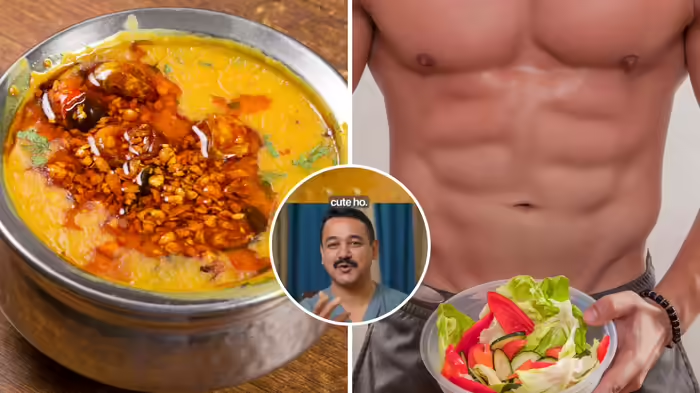
A lack of adequate protein intake can silently weaken the body. Nails, teeth, bones, skin—everything begins to appear dull and fragile. While most Indians believe that eating dal (lentils) is enough to meet daily protein requirements, a senior doctor from Fortis Hospital has dismissed this assumption, calling it a “cute misunderstanding.”
Dal Has Protein – But Not the Way You Think
Protein is a crucial macronutrient, required daily in large quantities. It contains essential amino acids needed for building muscles, repairing tissues, and maintaining strong bones. Although dal is widely considered a protein-rich food in India, doctors warn that this belief is only partially true.
According to Fortis Hepatologist and Gastroenterologist Dr. Shubham Vats, “100 grams of raw dal contains around 24 grams of protein. But if you think dal alone is a high-protein meal, I’m sorry—you’re mistaken.”
Dal vs. Chicken: Almost Equal Protein, But…
Numerically, dal does seem promising. Raw dal has only 5–6 grams less protein than 100 grams of chicken. Yet, Dr. Vats points out a practical problem: nobody eats 100 grams of dal in one meal.
When cooked, 100 grams of dal becomes nearly 5 to 6 bowls worth of food—enough to feed an entire family. In reality, one bowl of cooked dal contains only 4–5 grams of protein. To consume 24 grams of protein from dal, one would need to eat at least five bowls, which is nearly impossible in a single meal.
Dal Provides “Incomplete Protein”
Despite offering some protein, dal lacks several essential amino acids. This makes it an incomplete protein source, meaning the body cannot absorb or utilize it fully. For muscle building, recovery, and overall health, dal alone is insufficient.
How to Make a Protein-Rich Dal Meal
Doctors recommend pairing dal with complementary protein sources to make the meal complete and more effective:
- Paneer (Cottage Cheese)
- Eggs
- Curd/Yogurt
- Whey Protein
These combinations help fill the amino acid gaps and make the meal more nutritious.
Bottom Line
Dal is healthy—but it is not a standalone high-protein source. Depending solely on dal for your daily protein requirement may leave your body nutritionally deficient.
Disclaimer: This article is for informational purposes only. NBT does not guarantee its accuracy or impact. It should not be considered a substitute for professional medical advice. Always consult your doctor for personalized guidance.
Discover more from SD NEWS agency
Subscribe to get the latest posts sent to your email.