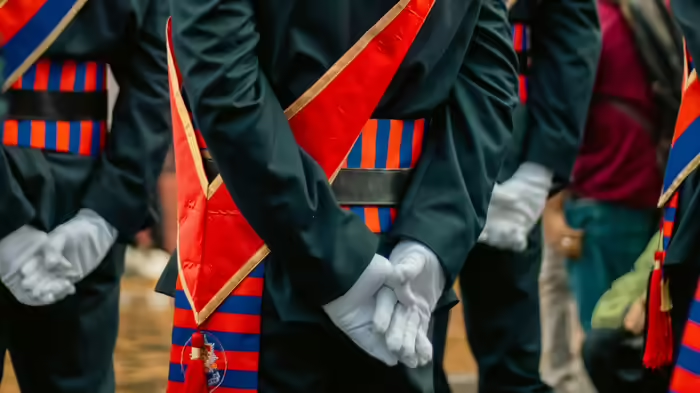
The Indian Army is known across the world for its discipline, dignity, and unwavering commitment to duty. Every aspect of a soldier’s conduct — from the way the uniform is worn to the way they stand, speak, or even react publicly — reflects the values of the armed forces. Among these practices, there is one tradition that very few civilians are aware of: soldiers do not clap while wearing their uniform.
This rule is not officially documented in military law, yet it has evolved into a deeply respected code of conduct. It is now a part of the Indian Army’s unwritten military etiquette.
A Tradition Rooted in Military Courtesy
You will rarely, if ever, see a soldier in uniform applauding during an event. This is not just a routine habit — it is a matter of military decorum. Over the years, this practice has become a symbolic representation of the Army’s discipline and restraint.
Although there is no formal penalty associated with clapping in uniform, the tradition is so widely accepted that soldiers naturally follow it as part of their military culture.
The Instruction That Reinforced the Practice
The tradition gained renewed strength in 2015 when then Army Chief General Dalbir Singh Suhag addressed soldiers during an official event. At the conclusion of his speech, he instructed:
“After my address, please do not clap. From now on, we shall uphold the dignity of not clapping while in uniform.”
This simple, dignified instruction became a widely followed convention across the ranks. Even though it was not a written rule, it turned into a respected practice adopted in military ceremonies and official gatherings.
Why Soldiers Avoid Clapping While in Uniform
1. Uniform Represents Duty, Not Personal Emotion
Once a soldier wears the uniform, he does not remain an individual — he becomes a representative of the nation and its armed forces.
Every gesture is symbolic. Applause, being a personal emotional reaction, is avoided to maintain the neutrality and dignity associated with the uniform.
2. To Maintain Political Neutrality
Public applause can sometimes be interpreted as endorsement of a speaker’s views or agenda, especially in political or sensitive contexts.
Since the Indian Army is strictly non-political, soldiers avoid any gesture that might be misinterpreted as political alignment.
3. Part of Military Etiquette
Military behaviour is governed by etiquette that emphasizes controlled reactions, discipline, and composure.
Clapping — an expressive public gesture — is considered inconsistent with this formal conduct.
The Deeper Significance of the Uniform
The Army uniform is more than attire — it symbolizes honour, sacrifice, responsibility, and the constitutional oath taken by soldiers.
Wearing the uniform means the soldier is constantly representing the institution. For this reason, even small actions like clapping are performed with caution or avoided altogether.
The Army also maintains strict guidelines regarding cleanliness, proper fitting, badges, insignia, and decorations. This meticulous attention to detail underscores the respect associated with the uniform.
Not a Rule, But a Matter of Honour
Although there is no written or punishable rule against clapping in uniform, soldiers still follow it out of respect for the ethos of the armed forces.
It is an unwritten code — a tradition that signifies discipline, dignity, and neutrality.
In the end, it is not about prohibition — it is about pride.
A pride rooted in the belief that the uniform represents the nation, and every action performed while wearing it must reflect the highest standards of military conduct.
Discover more from SD NEWS agency
Subscribe to get the latest posts sent to your email.