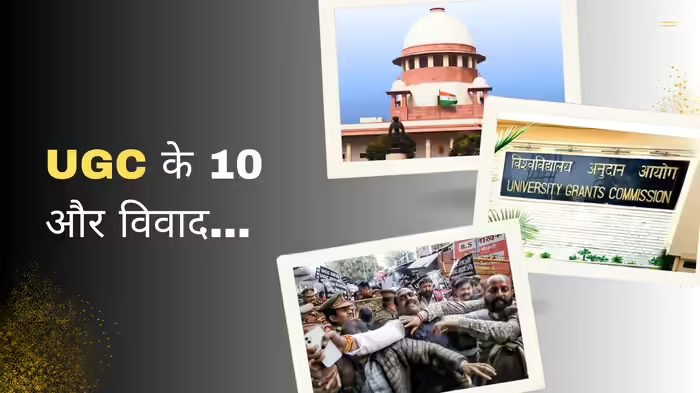
The University Grants Commission (UGC), India’s apex higher education regulatory body, is once again at the center of controversy. Over the past 15 years, the UGC has faced at least ten major protests, ranging from derecognition of deemed universities to issues like COVID-era exams, credit system reforms, and caste-based discrimination.
Background:
Established on 28 December 1953 by Education Minister Maulana Abul Kalam Azad, the UGC received statutory recognition through the UGC Act of 1956, making it a permanent government body. It is tasked with regulating colleges and universities, granting recognition, safeguarding student interests, and framing higher education policies. Over the years, many UGC decisions have faced strong backlash, sometimes even reaching the Supreme Court.
Key Controversies in the Last 15 Years:
- 2009-2010 – Derecognition of 44 Deemed Universities: UGC revoked recognition of 44 deemed universities failing to meet standards. Students and universities protested, and the Supreme Court intervened to save some institutions while instructing UGC to frame stricter rules.
- 2013-14 – DU’s Four-Year Undergraduate Program (FYUP): UGC mandated DU to implement a four-year program, sparking protests from students and teachers. The program was eventually withdrawn in 2014.
- 2015 – Choice Based Credit System (CBCS): UGC introduced a flexible credit system to allow students to choose interdisciplinary courses. Teacher unions opposed it, citing lack of preparation. CBCS continued with guideline revisions.
- 2016 – Campus Caste Discrimination: The suicides of students like Rohith Vemula and Pailin Tadvi highlighted caste-based discrimination, prompting public outcry and Supreme Court petitions demanding stricter UGC rules.
- 2018 – Autonomy to 60 Universities: UGC granted graded autonomy for course design and fees, raising privatization concerns. Autonomy remained, but UGC increased oversight.
- 2020 – COVID-Era Exams: UGC directed universities to conduct final-year exams during the pandemic. Some states resisted; the Supreme Court allowed online/offline exams, supporting UGC.
- 2022 – CUET Technical Issues: Implementation of the Central Universities Common Entrance Test faced delays, technical glitches, and paper leaks, triggering protests.
- 2023 – Reservation De-Reservation Controversy: Draft guidelines allowed posts reserved for SC/ST/OBC to go to general category if candidates were unavailable. Strong protests forced UGC to revert the draft.
- 2024 – NET Paper Leak: A massive paper leak led to cancellations, CBI investigation, and protests. Exams were later conducted under Supreme Court supervision.
- 2025 – Removal of Approved Journal List: UGC removed its list, suggesting Scopus instead. Teachers expressed concerns over predatory journals. New guidelines were later issued.
- 2026 – UGC Equity Act: The recently introduced Equity Act 2026 aims to prevent caste-based discrimination, but general category groups allege it is one-sided. Critics argue that under the new law, a person could be accused without evidence and would have to fight a long legal battle to prove innocence. Protests have erupted in Delhi, Uttar Pradesh, Rajasthan, Bihar, and other states. The matter is now under Supreme Court review.
The UGC’s journey shows a pattern of policy-making that often sparks debates, protests, and judicial scrutiny. The coming weeks will be crucial in determining how the Equity Act 2026 will shape India’s higher education landscape.
Discover more from SD NEWS agency
Subscribe to get the latest posts sent to your email.