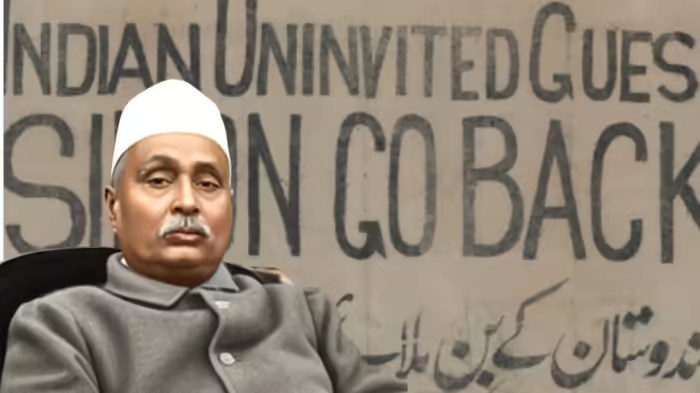
Remembering Lala Lajpat Rai on His Birth AnniversaryLala Lajpat Rai, born on 28 January 1865 in Dhudike village, Ludhiana district, Punjab, was a revolutionary leader, writer, and nationalist. Known as the “Punjab Kesari”, he played a pivotal role in India’s struggle for independence and founded the nationalist magazine The People. Every year, his birth anniversary is celebrated to honor his courage, leadership, and dedication to the cause of freedom.
At the age of 63, Lajpat Rai led a protest against the Simon Commission, displaying remarkable bravery in the face of British repression. When the police attacked the demonstrators with lathi charges, Rai stood firm and was critically injured, ultimately passing away on 17 November 1928.
What Was the Simon Commission?
The Simon Commission, formed in 1927, was a seven-member committee chaired by Sir John Simon, tasked with reviewing the Government of India Act of 1919. Its primary purpose was to examine the functioning of the British administration in India.
The commission sparked widespread outrage because not a single Indian was included in its membership. The decision to exclude Indians was reportedly based on recommendations from Lord Irwin, then the Viceroy of India.
Why Did Indians Protest?
The lack of Indian representation led to nationwide protests. The Indian National Congress resolved to boycott the commission in 1927. The British authorities imposed Section 144 to curb demonstrations, but public dissent continued through strikes, black flags, and slogans like “Simon Go Back”.
Lala Lajpat Rai’s Leadership
Rai led a peaceful, non-violent march against the Simon Commission, inspiring thousands of Indians to voice their opposition. During a protest in Lahore on 30 October 1928, the police, under Superintendent James A. Scott, ordered a lathi charge on the demonstrators. Despite receiving multiple blows, Rai refused to retreat, symbolizing unyielding resistance against colonial rule.
Reflecting on the incident, Rai said:
“Every blow struck upon me is like a nail in the coffin of British imperialism. I do not know whether I will survive, but my soul will inspire others to sacrifice more for the freedom of our nation.”
Early Life and Education
Lala Lajpat Rai was born to Radha Kishan, a teacher of Urdu and Persian, and Gulab Devi, a devout mother. He received his early education partly from his father and partly from school teachers. Throughout his life, Rai dedicated himself to education, social reform, and national service, leaving a legacy that continues to inspire generations of Indians.
Discover more from SD NEWS agency
Subscribe to get the latest posts sent to your email.