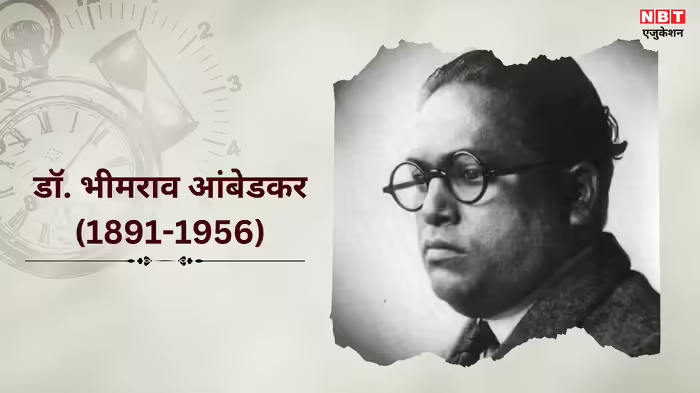
As India observes the 69th death anniversary of Dr. Bhimrao Ramji Ambedkar—architect of the Indian Constitution, visionary jurist, economist, and one of the greatest social reformers—the nation reflects on his extraordinary contributions. Observed as Mahaparinirvan Diwas, the day marks the passing of a leader who transformed the social and political landscape of India.
Birth and Early Life: From ‘Sakpal’ to a Global Icon
Born on 14 April 1891 in Mhow near Indore (now in Madhya Pradesh), Dr. Ambedkar came into a Mahar family, historically subjected to severe caste-based discrimination. His full birth name was Bhimrao Ramji Sakpal. His father’s name was Ramji Rao, his mother was Bhima Bai Sakpal, and his grandfather was Maloji Sakpal—the surname clearly visible across generations.
Young Bhimrao, affectionately known as “Bhima”, faced caste-based exclusion from his earliest days. Despite this, he excelled academically, standing first in his class and breaking community barriers by becoming the first Mahar student to pass the 4th standard and later the matriculation examination in 1907.
Why and How Sakpal Became Ambedkar
Even as Bhimrao’s academic brilliance shone, society continued to judge him by his caste. Discrimination followed him into school, where he was denied equal treatment and dignity.
Recognizing both the young boy’s exceptional talent and the prejudice he faced, his teacher Mahadev Ambedkar took a remarkable step. Out of affection, respect, and a desire to protect him from humiliation, he gave Bhimrao his own surname—Ambedkar—in place of Sakpal.
This symbolic act offered Bhimrao not only dignity but a new identity that distanced him from caste-based stigma. Dr. Ambedkar later formally adopted the surname and carried it throughout his life and legacy.
Meaning of the Name ‘Ambedkar’
In Maharashtra, it was once a common tradition for people to adopt the name of their ancestral village as their surname. The surname Ambedkar traces its roots to Aambavade, a village in today’s Ratnagiri district.
- ‘Ambed’ refers to the village Aambavade
- ‘Kar’ in Marathi means “from” or “belonging to”
Thus, Ambedkar literally means “a person belonging to the village Aambavade.”
Even though the name was not originally part of Bhimrao Sakpal’s lineage, it became an inseparable component of his identity—and eventually a name revered across the world.
Discover more from SD NEWS agency
Subscribe to get the latest posts sent to your email.