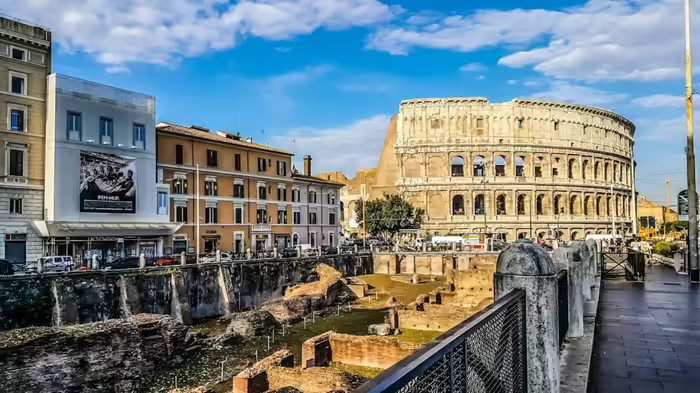
Many countries around the world have work cultures vastly different from India’s, and Indian professionals working abroad often find themselves pleasantly—or sometimes shockingly—surprised. This was the case for Jyoti, an Indian software professional currently working in Italy, whose first day at the office taught her several unexpected lessons.
A Completely Different Work Environment
Unlike India, where addressing seniors as “Sir” or “Ma’am” is the norm and long hours are expected, Italian offices operate on a very different rhythm. Jyoti discovered that after 6 PM, the office is almost completely empty. She shared her experience in a video on Instagram titled “My First Day at an Italian Office”, highlighting 12 aspects of Italy’s unique work culture that left her amazed.
From the outset, Jyoti was surprised to learn that calling her boss “Sir” caused laughter; Italian offices prefer employees to use first names or nicknames instead. The coffee culture was another eye-opener—while Jyoti attempted to pay for her coffee, her manager stopped her, explaining that juniors do not pay when seniors are around.
Flexibility and Respect for Personal Time
Italian workplaces do not strictly monitor start and end times. Employees are evaluated on completing tasks, not on rigid schedules. Taking breaks is not an excuse to claim busyness, and conversations during coffee breaks focus on holidays or leisure activities rather than work.
12 Key Insights into Italian Work Culture (According to Jyoti)
- Do not address your boss as “Sir” or “Ma’am”; use first names or nicknames.
- You don’t need to pay for coffee if seniors are present.
- Micro-management is absent; no one tracks in-out timings.
- Never avoid breaks; they are considered essential.
- During coffee breaks, discuss holidays or leisure, not office work.
- Employees are automatically included in group discussions; no invitations are required.
- By 6 PM, the office is virtually empty; calling or messaging colleagues after work is frowned upon.
- Mistakes are treated as learning opportunities rather than failures.
- Colleagues say goodbye when leaving, fostering a family-like environment.
- Help is offered if someone does not speak Italian; learning is encouraged.
- Managers encourage weekend outings and sharing photos for team bonding.
- The office functions as a community, not just a workplace.
More Than Just Work
Jyoti emphasizes that working in Italy goes beyond completing tasks. The office is a space to build relationships and connect with colleagues, reflecting a culture that values balance, respect, and personal interaction over long hours and hierarchy.
Discover more from SD NEWS agency
Subscribe to get the latest posts sent to your email.