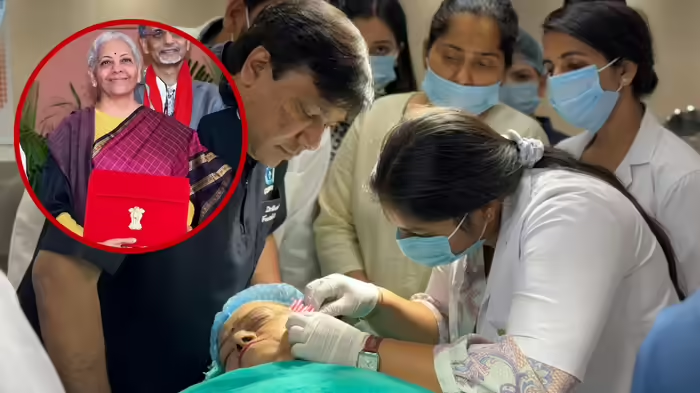
In the Union Budget 2026, the central government has announced plans to upgrade existing private and public healthcare institutions and establish new centers over the next five years, aiming to create 1 lakh jobs for Allied Health Professionals (AHPs).
Finance Minister Nirmala Sitharaman unveiled the budget in Parliament on 1 February 2026, announcing several measures in education and employment, including the establishment of three new National Institutes of Pharmaceutical Education and Research (NIPERs), three new All India Institutes of Ayurveda (AIIAs), five new university townships, a new National Institute of Design (NID), a second National Institute of Mental Health and Neuro Sciences (NIMHANS-2) in North India, and the recruitment of 1 lakh Allied Health Professionals.
Jobs for Allied Health Professionals
The Finance Minister highlighted that current Allied Health Professionals will be upgraded, and new allied healthcare institutions will be opened in both private and government sectors. This initiative will cover ten selected fields, including Optometry, Radiology, Anesthesia, OT Technology, Applied Psychology, and Behavioral Health, among others. Over the next five years, 100,000 AHPs will be recruited, creating significant employment opportunities in the healthcare sector.
Who are Allied Health Professionals?
Allied Health Professionals play a crucial role in the healthcare sector. They are not doctors or nurses, but work closely with them. Also referred to as paramedical or supporting healthcare professionals, AHPs include technicians and assistants working in hospitals or other health centers.
Roles and Responsibilities
AHPs are an important link in the healthcare chain. Their responsibilities include conducting sample tests and preparing reports, patient care, providing therapy, assisting during surgeries, and planning diets.
How to Become an Allied Health Professional
Students who have completed Class 12 with Physics, Chemistry, and Biology (PCB) can pursue a career as an Allied Health Professional. After Class 12, they can enroll in recognized medical institutes through entrance exams to pursue diploma courses like DMLT, DOT, or DRIT, which typically last 2 to 3 years.
Alternatively, students can opt for B.Sc. programs in Medical Lab Technology, Radiology, or Optometry, which usually span 3.5 to 5 years, followed by M.Sc. or postgraduate diploma options.
Under the National Commission for Allied and Healthcare Professionals Act, 2021, eligibility is defined in two categories:
- Allied Health Professionals: 2–4 years of diploma or degree after Class 12 in the relevant field.
- Healthcare Professionals: 3–6 years of degree course in the relevant field.
Upon completion of the courses, graduates can secure employment in private or government hospitals and clinics, opening doors to a rewarding career in healthcare.
Discover more from SD NEWS agency
Subscribe to get the latest posts sent to your email.