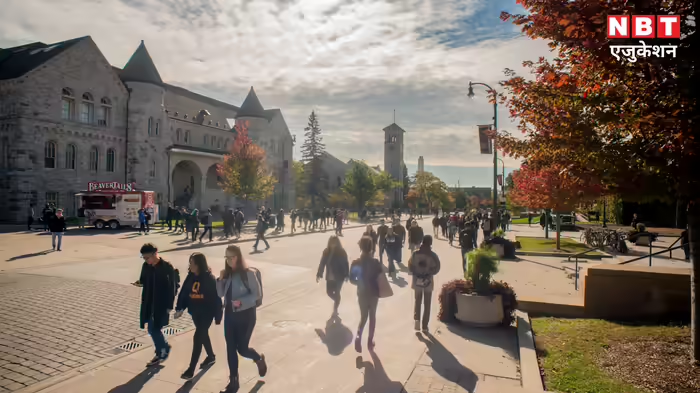
For international students aiming for higher education in Canada, 2025 proved to be a year of unexpected challenges. Several immigration and education-related policy changes left students struggling to navigate the system. From capped study permits to stricter Post-Graduation Work Permit (PGWP) rules, the year was full of hurdles for aspiring students. Here’s a look at the key developments that defined 2025 for foreign students in Canada.
1. Study Permit Quotas Reduced
In 2025, Canada issued a target of only 437,000 study permits, a 10% decline compared to 2024. The government cited the need to reduce temporary resident numbers and alleviate housing crises as reasons for the cut.
2. Masters & Doctoral Students Included in Caps
For the first time, graduate students (Masters and PhD) were counted within the total study permit quota, making it tougher for them to secure admission in Canada.
3. Higher Financial Proof Requirement
Applicants now need to show CAD 22,895 in savings for tuition and living expenses, up from the previous CAD 20,635, making study permits more expensive.
4. Stricter PGWP Eligibility by Field of Study
Students completing college or non-degree programs must pursue PGWP-eligible courses, with priority given to healthcare, skilled trades, and engineering programs.
5. New Language Requirement for PGWP
Post-graduate work permits are now issued only if graduates meet language requirements: CLB 7 for university graduates and CLB 5 for college graduates in English or French.
6. Restrictions on Spousal Open Work Permits (SOWP)
Previously, spouses of international students could easily obtain work permits. Now, only spouses of Masters, Doctoral, or professional program students (medicine or law) are eligible.
7. Student Direct Stream (SDS) Abolished
Fast-track SDS visas for countries like India, China, and the Philippines have been discontinued. Students now need to apply through the regular visa process.
8. Tougher Rules for Changing Colleges
International students wishing to switch colleges must now apply for a new study permit instead of simply notifying IRCC, making transfers more cumbersome.
9. Mandatory Student Reporting for Institutions
Under the “Trusted Institution” framework, colleges and universities must report the number of international students enrolled and attending classes. Failure to comply may result in being barred from admitting foreign students.
10. Harsher Path to Permanent Residency (PR)
Canada’s Express Entry system has shifted toward a category-based selection, meaning that a Canadian degree alone may not guarantee PR. Students must now pursue in-demand courses or jobs, particularly in healthcare and STEM fields.
Conclusion: 2025 tested the patience and resilience of international students in Canada. With tighter regulations, higher costs, and restricted work opportunities, students faced a more challenging road than ever before. As the year ends, navigating Canada’s education and immigration policies requires careful planning and awareness.
Discover more from SD NEWS agency
Subscribe to get the latest posts sent to your email.