
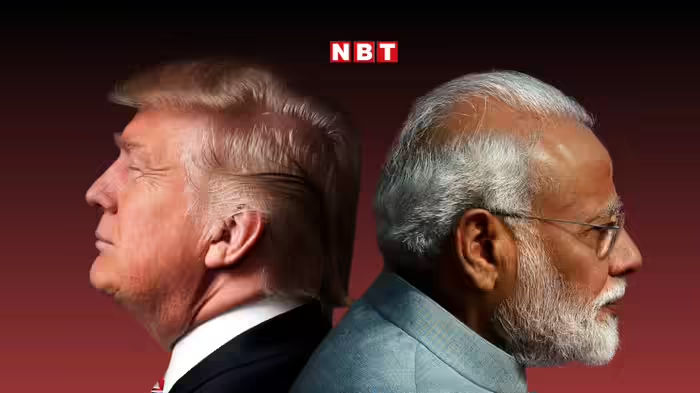
Amid rising inflation in the United States, several American lawmakers have called for the removal of tariffs imposed on Indian goods. The US had earlier levied a 50% tariff on products from India, including an additional 25% “secondary” tariff targeting imports linked to India’s continued purchase of oil from Russia.
Three members of the US House of Representatives—Deborah Ross, Marc Veasey, and Raja Krishnamoorthi—have introduced a proposal challenging the 25% secondary tariff imposed on August 27, 2025. The proposal seeks to utilise powers granted under the International Emergency Economic Powers Act (IEEPA) to reverse the additional costs imposed on imports from India.
Impact on US Businesses and Consumers
The lawmakers highlighted that the tariffs have significantly increased import costs, affecting American companies and ordinary consumers alike. They argued that the move is part of a broader effort by Congress to regain control over US trade policy, which they say has been undermined by the President’s use of emergency powers.
Deborah Ross, representing North Carolina, emphasised the strong economic ties between the state and India, citing trade, investment, and a vibrant Indian-American community. She warned that the tariffs could jeopardise thousands of jobs and billions of dollars in investments stemming from US-India trade relations.
Marc Veasey of Texas echoed these concerns, stating that the tariffs are adding financial pressure on families already struggling with rising costs. “India is a vital cultural, economic, and strategic partner. These unlawful tariffs act as a tax on everyday North Texans already facing inflation,” Veasey said.
Raja Krishnamoorthi added that the tariffs disrupt supply chains, harm American workers, and increase costs for consumers. He argued that removing the tariffs would strengthen the US-India partnership.
Trump Administration’s Position
The tariffs were initially imposed by former President Donald Trump on August 1, 2025, at 25% and later increased by an additional 25%. The administration justified the move citing India’s continued purchase of oil from Russia, claiming it indirectly supported Russia’s objectives in the ongoing Ukraine conflict.
As the debate unfolds in Congress, lawmakers emphasise that rolling back tariffs could restore supply chain stability, protect American jobs, and reinforce the strategic and economic partnership between the US and India.
Discover more from SD NEWS agency
Subscribe to get the latest posts sent to your email.