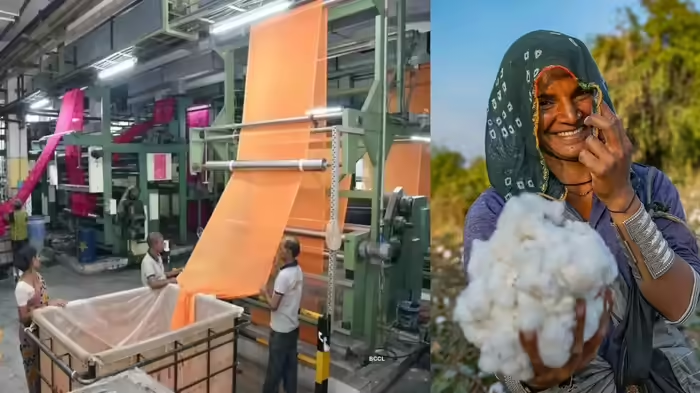
India’s textile sector is not merely an industry—it is the heartbeat of millions of livelihoods, a repository of tradition, and a driver of technological progress. Over the past 11 years, under Prime Minister Narendra Modi’s leadership, the sector has witnessed visionary reforms, policy support, and structural transformation, fostering new confidence, opportunities, and global recognition.
Supporting Farmers: The Foundation of the Value Chain
The textile value chain begins in the fields. Recognizing this, the government prioritized protecting farmers from market uncertainties, middlemen pressures, and price fluctuations. Between 2004-2014, government agencies procured 173 lakh cotton bales, which surged to 473 lakh bales during 2014-2024—an unprecedented 173% increase.
Cotton MSP (Minimum Support Price) has nearly doubled in a decade, from ₹3,700 per quintal in 2013-14 to ₹7,710 in 2025-26, enhancing both farmer income and economic security.
Creating Higher Income Opportunities
India cannot merely compete globally by increasing production; it must focus on quality and advanced fiber technologies. In line with this, the government launched the Mission for Cotton Productivity with a budget of ₹2,500 crore, promoting superior seeds, scientific farming, modern technology, and strict quality control. Additionally, the government is encouraging “new-age fibers” such as flax, ramie, sisal, and milkweed, which offer higher income potential for farmers.
Import Duty Relief Boosts Competitiveness
Removal of import duty on cotton allowed mills to procure cotton at internationally competitive rates. Initially valid until September 30, the duty relief has been extended to December 31, 2025. This measure lowered yarn and fabric production costs, stabilized small and medium enterprises, and ensured better raw cotton availability across the supply chain, from handlooms to power looms.
PLI Scheme Injects Fresh Energy
The Production-Linked Incentive (PLI) scheme has revitalized the textile sector. The application portal has been extended until December 31, 2025, with 27 new applications already received. This initiative is expected to create new factories, introduce advanced technology, and generate millions of jobs. Among 74 approved companies, 42 are working specifically in technical textiles.
Tax Reforms Drive Growth and Affordability
The sector had long struggled with an inverted duty structure, which has now been resolved through Next-Gen GST reforms. Additionally, reducing GST to 5% on ready-made garments up to ₹2,500 ensures affordable clothing for consumers and stimulates demand in smaller towns and villages.
Expanding into New Markets
India has strategically identified 40 new markets with untapped potential and is now leveraging Free Trade Agreements (FTAs) to strengthen its presence. In just one year, India’s textile exports expanded to 111 countries, with more than 50% growth in 38 of these countries.
A Sector Beyond Production
Today, India’s textile industry is more than just production—it is a foundation of economic strength, employment generation, and global leadership. Emerging as a modern, reliable, and innovation-driven hub, the sector is poised to propel India’s economy forward while establishing a new global identity for “Made in India” textiles.
Discover more from SD NEWS agency
Subscribe to get the latest posts sent to your email.