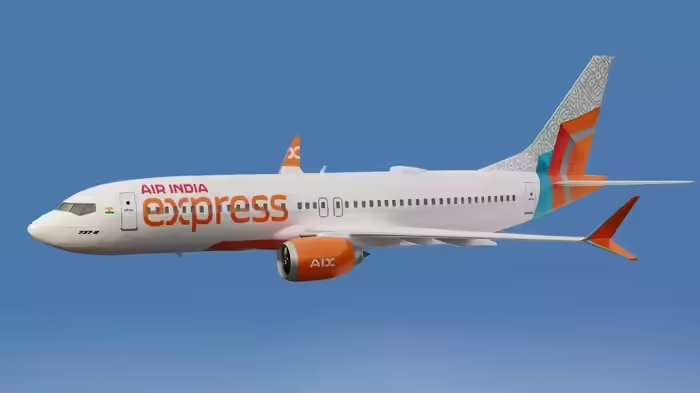
The ongoing crisis at IndiGo, India’s largest airline, is beginning to reshape the competitive landscape of the aviation sector. As thousands of IndiGo flights have been cancelled in recent weeks—causing widespread disruption for passengers—the Tata Group–owned Air India Group is reportedly moving to seize the opportunity. However, this strategy has triggered growing anxiety and opposition among pilots of Air India Express.
According to a report by The Times of India, the Air India Group has issued recruitment advertisements for experienced Airbus A320 captains, a move widely seen as an attempt to attract talent amid IndiGo’s operational difficulties. While the step may strengthen the group’s capacity in the long run, it has raised serious concerns internally, particularly among A320 pilots currently flying with Air India Express.
Why Pilots Are Worried
Pilots at Air India Express fear that the induction of new A320 commanders will further reduce their flying hours, directly impacting their earnings. In aviation, pilot salaries are closely linked to flight hours, and any reduction can significantly affect monthly income.
Nearly 100 pilots have written to the management of the Tata Group’s low-cost carrier, formally opposing the proposed recruitment. Their main argument is that the airline is already struggling to provide adequate flying hours to its existing A320 pilots.
Fleet Constraints Add to Tension
IndiGo is the world’s largest operator of aircraft from the Airbus A320 family. In comparison, Air India Express currently operates a fleet of around 110 aircraft, of which 76 are Boeing 737s and only 34 belong to the Airbus A320 family—these inherited from Air India and AirAsia India.
Compounding the issue, at least 10 of these A320 aircraft are expected to be returned to lessors by early next year. Although the airline plans to induct more aircraft in the future, pilots say this will take time, creating a mismatch between manpower and available aircraft.
Impact on Flying Hours and Salaries
Due to limited aircraft availability, pilots fear their monthly flying hours could be restricted to the bare minimum of around 40 hours. During the Covid-19 pandemic, AirAsia India had reduced fixed-hour pay contracts from 70 hours to 40 hours, a practice later followed by Air India as well. Only Vistara refrained from implementing such deep cuts at the time.
Recently, even IndiGo reduced fixed flying hours for newly recruited junior first officers from 70 hours to 50 hours. Under fixed-hour contracts, pilots are guaranteed pay for a minimum number of hours even if actual flying is less—making these contracts crucial for income stability.
Pilots Question Recruitment Logic
Air India Express currently employs around 1,600 pilots, and discontent among A320 pilots has been growing. They claim that for over a year, management has repeatedly stated that the group already has an excess of A320 captains, which is why pilots are kept on 40-hour contracts and demands for a return to 70-hour contracts have been rejected.
Their core question remains: if the airline is unable to fully utilise its existing pilots, why is it recruiting from outside?
As the Air India Group seeks to strengthen its position amid IndiGo’s troubles, balancing expansion plans with internal workforce concerns may prove to be one of its biggest challenges in the months ahead.
Discover more from SD NEWS agency
Subscribe to get the latest posts sent to your email.