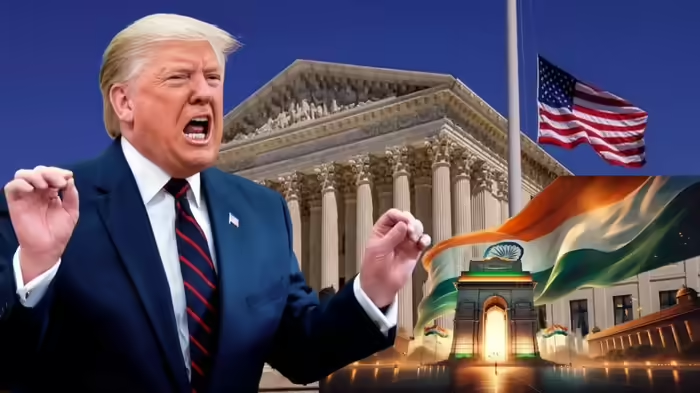
New Delhi: The U.S. Supreme Court has dealt a major legal blow to former President Donald Trump’s tariff policy, declaring it unlawful and raising significant questions about the future of U.S. trade strategy. Trump described the ruling as “insulting” and indicated that his administration is already working on a backup plan.
Key Highlights of the Ruling
- The Supreme Court, in a 6-3 decision authored by Chief Justice John Roberts, ruled that the use of emergency powers under the International Emergency Economic Powers Act (IEEPA) of 1977 to impose broad tariffs is illegal.
- The verdict clarified that the President does not have unilateral authority to levy tariffs; such measures require explicit approval from Congress.
- The ruling has wide-reaching implications for global trade, including India, which recently signed an interim trade deal with the U.S., reducing tariffs from 50% to 18%. Post-verdict, India may need to reassess its trade strategy in light of this new legal framework.
Implications for India and Businesses
- The ruling raises questions about refunds for tariffs already collected and the timeline for restoring previous trade arrangements. Answers to these issues are expected in the coming weeks.
- While the decision invalidates Trump’s broad tariff authority, sector-specific tariffs imposed through formal investigations remain unaffected. Ongoing inquiries in various industries could still result in targeted duties, offering a legally sound method for the U.S. to maintain trade leverage.
Administration’s Plan B
Officials have indicated that contingency measures have long been prepared. Treasury Secretary Scott Bassent noted that if emergency powers are limited, Washington has alternative “Plan B” options:
- Established Trade Laws: Using existing statutory mechanisms that allow tariffs after formal investigations into unfair trade practices or national security risks. These processes are slower but legally robust and have been previously used for steel, aluminum, and other imports.
- Strategic, Targeted Tariffs: Designing tariffs linked to specific countries, products, or trade violations rather than broad-based measures. This approach reduces legal risk while maintaining economic leverage.
- Congressional Authorization: Seeking explicit legislative approval for broad tariff powers, which is politically challenging and time-consuming but provides the strongest legal foundation for future actions.
Impact on Trump’s Trade Strategy
The ruling is a significant setback for Trump’s trade war approach, which relied heavily on unilateral executive authority to pressure other nations. It emphasizes the limits of executive power, particularly for sweeping economic measures affecting numerous importers and consumers.
For businesses, the decision provides some certainty against sudden tariff changes. However, the administration will now need to explore alternative pathways to enforce trade policies and achieve strategic objectives, including targeted tariffs and Congress-approved measures.
Discover more from SD NEWS agency
Subscribe to get the latest posts sent to your email.