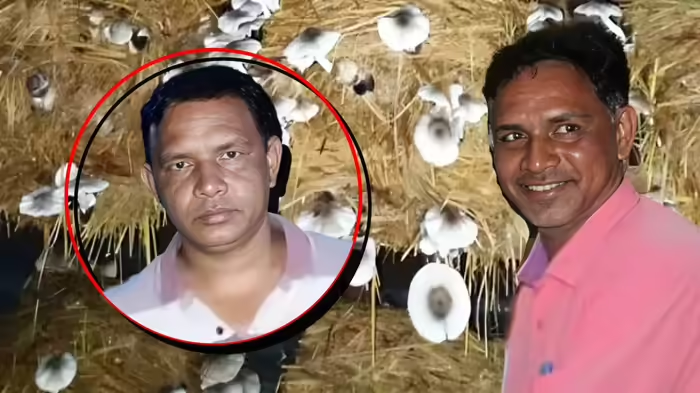
Rajendra Kumar Sahu, a progressive farmer from Basna Tehsil in the Mahasamund district of Chhattisgarh, has turned the issue of crop residue burning into a lucrative opportunity. Despite holding triple MA degrees, Rajendra has been earning a daily profit of up to ₹10,000 by cultivating Paddy Straw Mushrooms beneath his mango trees. His unique, low-cost method is not only saving the environment but also opening up new doors of entrepreneurship for thousands of other farmers.
The Problem and Opportunity:
In many parts of India, the practice of burning crop stubble after rice harvest causes severe environmental pollution and depletes the soil’s nutrients. However, Rajendra Kumar Sahu has turned this challenge into a business opportunity. Instead of burning the paddy straw, he has been cultivating organic ‘Paddy Straw Mushrooms’ (locally known as ‘Para’) using a sustainable and cost-effective technique. Thanks to this innovation, Rajendra now earns ₹10,000 in pure profit daily. He has not only found a way to protect the environment but has also created new avenues for thousands of other farmers.
How It All Started:
Despite being highly educated, Rajendra chose farming as his career. In 2005, he began by cultivating Oyster Mushrooms. However, he soon realized that the local market had high demand and better prices for Paddy Straw Mushrooms. He started experimenting with spawns by bringing seeds (spores) from Odisha. Over time, he mastered the cultivation process. One of his biggest achievements was developing high-quality spawns at home using low-cost tools like pressure cookers and spirit lamps, eliminating his reliance on external sources.
Cost-Cutting Innovations:
Instead of constructing expensive mushroom sheds, Rajendra utilized the resources available in nature. He planted mango trees in his village and created vertical stands under the trees to grow mushroom beds. The shade from the trees not only keeps the temperature 10 degrees lower than the open field but also naturally maintains the required moisture. This “micro-climate” allows him to successfully grow mushrooms even during the harsh summer months, from March to October.
The Profitable Math:
Currently, Rajendra has the capacity to produce mushrooms from 2,000 beds and harvests approximately 50 kg of mushrooms daily. Paddy Straw Mushrooms are known for their superior taste and flavor and are sold at ₹270-300 per kilogram in the market. The cost of setting up one bed is only ₹70-80. With this, Rajendra earns about ₹10,000 in daily profit. During the winter months, he switches to cultivating Oyster Mushrooms, ensuring his income continues year-round.
Zero-Waste Farming Model:
Rajendra’s farming follows a ‘Zero-Waste’ model. After harvesting mushrooms, the remaining paddy straw is not discarded. Instead, he uses a waste decomposer to turn it into organic compost, which he either uses on his farm or distributes freely to other farmers. Rajendra has already trained thousands of people in mushroom cultivation. His innovative approach earned him a national award in 2019, demonstrating that with the right thinking and technology, farming can be a highly profitable and sustainable livelihood.
Discover more from SD NEWS agency
Subscribe to get the latest posts sent to your email.