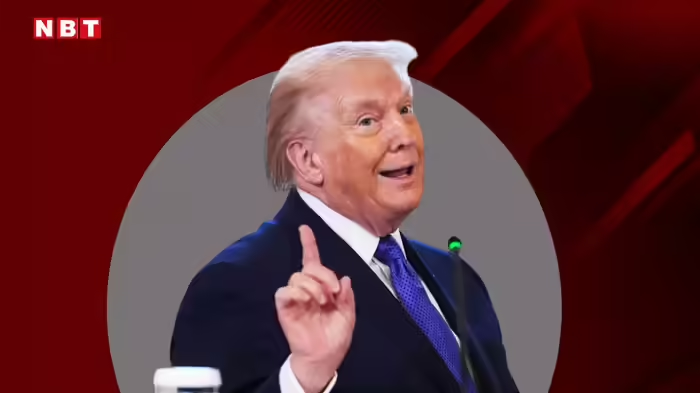
New Delhi: US President Donald Trump recently signed trade deals with several countries, including India, reducing tariffs to promote trade. However, these tariff cuts are coming at a steep cost for partner nations, which are now being required to make significant investments in the United States.
Japan First in Line
Japan is the first country affected by this strategy. According to a Reuters report, the US secured an agreement requiring Japan to invest $550 billion in American projects as part of the trade deal. On Tuesday, the Trump administration announced that Japan will finance $36 billion across three projects in the US:
- Oil export facility in Texas
- Industrial diamond plant in Georgia
- Natural gas power plant in Ohio
The trade deal reduced tariffs on Japanese goods to 15%, but in return, Japan must make these substantial investments. Howard Lutnick, US Commerce Secretary, stated that the Ohio power plant will be valued at $33 billion, making it the largest natural gas-based plant in the state and generating 9.2 gigawatts of electricity annually—more than the state’s total electricity demand. The plant will be operated by SB Energy, a subsidiary of Japan’s SoftBank Group.
Strategic Investments Across Sectors
Japan will also invest $2.1 billion in the Texas GulfLink deepwater crude oil export facility, expected to handle annual exports of $20–30 billion worth of crude oil. While Trump claims this investment includes an LNG project in Texas, neither Lutnick’s statement nor the White House fact sheet mentions it.
In Georgia, Japan will fund a synthetic industrial diamond manufacturing plant, which will meet 100% of US demand for synthetic diamond grit. This grit is critical for advanced manufacturing and semiconductor production, sectors in which the US currently relies heavily on China. The high-pressure synthetic diamond plant, valued at approximately $600 million, will be operated by Element Six, part of the De Beers Group, the world’s largest diamond company.
Implications for Partner Nations
While tariff reductions may make exports more competitive, countries like Japan are effectively paying a high price through required investments in strategic infrastructure. This signals a shift in trade negotiations, where tariff concessions are tied to large-scale economic commitments within the United States.
Discover more from SD NEWS agency
Subscribe to get the latest posts sent to your email.