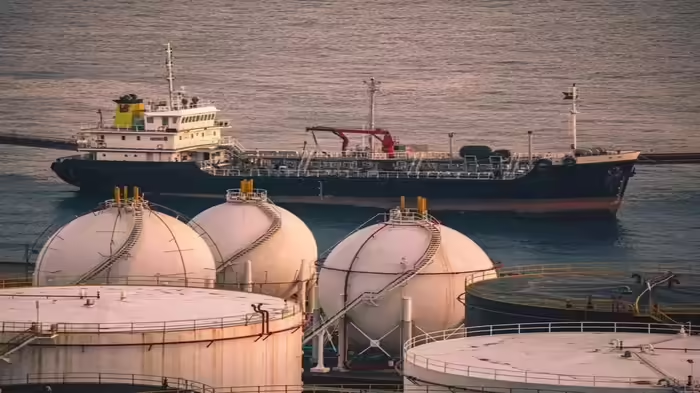
New Delhi — Imports of Russian crude into India are continuing through a covert maritime network known as the “shadow fleet,” even as geopolitical pressure mounts over sanctions-linked oil trade.
The development comes days after a February 2 trade agreement between India and the United States, under which Washington reportedly urged New Delhi to reduce its purchases of Russian oil and increase imports from the US and Venezuela. US President Donald Trump claimed India had agreed to halt Russian oil purchases, a statement that has not been officially confirmed by Indian authorities. Moscow, too, has said it has received no such directive from New Delhi.
India remains a key buyer
Following the Russia–Ukraine conflict, India emerged as one of the largest buyers of discounted Russian crude. While purchases reportedly slowed after threats of steep US tariffs, imports have not stopped.
According to shipping data cited by CNBC, tankers linked to Russia’s sanctions-evading shadow fleet continue to unload crude at Indian ports, suggesting that the trade remains active despite diplomatic friction.
What is the shadow fleet?
The shadow fleet is a secretive network of tankers used to transport sanctioned oil and commodities by bypassing international restrictions. Often referred to as the “dark fleet,” these vessels employ deceptive practices such as:
- Sailing under false or frequently changed vessel names
- Switching off AIS (Automatic Identification System) tracking
- Operating under flags of convenience
- Using shell companies to obscure ownership
Russia is believed to have expanded reliance on this network after Western sanctions were imposed following the Ukraine war.
Tankers tracked at Indian ports
Data from global analytics firm Kpler indicates that at least four tankers associated with the shadow fleet are currently unloading, or preparing to unload, sanctioned Russian crude at Indian refineries:
- Giannis — unloading Urals crude at Chennai refinery
- Nyxora — delivering oil at Paradip refinery
- Tiburon — unloading at Vadinar refinery
- Seasons 1 — tracked near Vadinar, yet to discharge cargo
Fleet estimated at 1,400 vessels
Analysts estimate the shadow fleet now consists of roughly 1,400 ships, many of which previously transported Venezuelan or Iranian oil. Despite tightening enforcement, Russia is reportedly adding vessels and reflagging older tankers to maintain oil flows. In December alone, 17 previously sanctioned ships were reassigned under new flags for Russian operations.
Experts say the rapid evolution of the shadow fleet highlights the difficulty of enforcing global oil sanctions in a fragmented maritime market.
Discover more from SD NEWS agency
Subscribe to get the latest posts sent to your email.