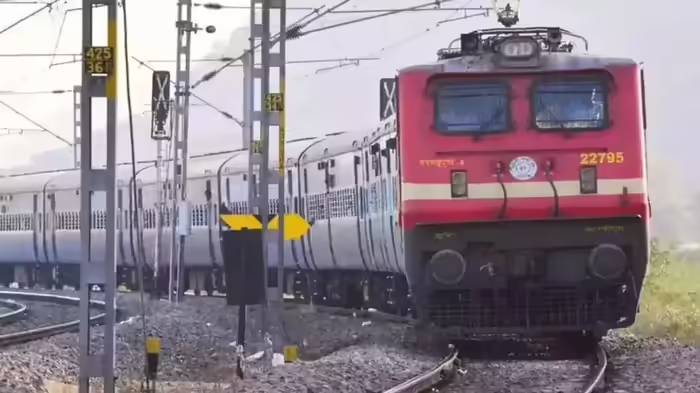
New Delhi: In a major development, India’s railways may soon see private companies taking charge of train operations. A key government committee, the Public Investment Board (PIB), has recommended involving private players across multiple fronts – from laying new tracks and improving port connectivity to procuring trains, wagons, and locomotives.
While the Modi government has been encouraging private participation in railways over the past two terms, the sector has traditionally been cautious in implementing Public-Private Partnerships (PPP). Now, led by the Expenditure Secretary, the PIB has emphasized the need for private investment in railway projects.
Private Models for Rail Projects
The committee suggested using government budgetary support to attract private players in multi-tracking projects. For procurement of rolling stock – trains, wagons, and locomotives – models such as wet leases, Hybrid Annuity Model (HAM), and PPP structures could be explored:
- Wet Lease: A private leasing company provides both rolling stock and the crew required to operate it.
- Hybrid Annuity Model (HAM): The government contributes 60% of the project cost during construction, with the remaining 40% paid in installments over time.
The PIB recommended that the railways consult the NITI Aayog and the Department of Economic Affairs to create a standard Model Concession Agreement, facilitating smoother private participation.
Challenges and Considerations
Railway officials point out that implementing PPPs in rail projects is more complex than in sectors like roads or electricity. They suggest that the HAM model may be the most viable option. The PIB also noted that Indian Railways currently relies heavily on coal transportation for revenue, and the government’s net-zero emissions target by 2070 may affect long-term traffic projections.
To address this, the committee recommended coordination with the Ministry of Power on future coal demand projections and adjusting network expansion plans accordingly. It also suggested that last-mile connectivity should generally be handled via road transport rather than rail.
Implications
This move could open India’s railways to private investments, bringing efficiency, modernization, and innovative financing models into one of the country’s most critical public infrastructure sectors. By leveraging private participation, the railways aim to upgrade infrastructure while meeting ambitious climate and operational goals.
Discover more from SD NEWS agency
Subscribe to get the latest posts sent to your email.