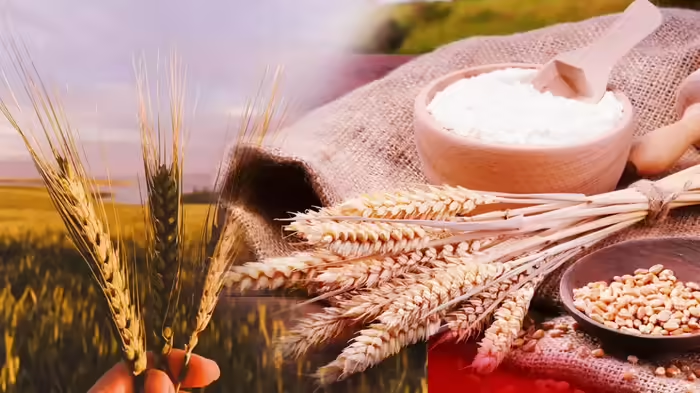
New Delhi: Once considered a forgotten grain and pushed to the verge of extinction, Khapli wheat, also known as Emmer wheat, has made a remarkable comeback. Driven by rising health consciousness and the growing burden of lifestyle-related diseases in urban India, this traditional grain is now being sold at three to five times the price of regular wheat flour.
As consumers increasingly shift toward functional foods to manage conditions such as diabetes, obesity, and hormonal disorders, Khapli wheat has emerged as a premium health product. Over the past two years, leading FMCG players such as ITC, along with brands like Urban Platter, Anveshan, GirOrganic, Sattvik, Conscious Food, Amla Earth, and several niche organic companies, have launched Khapli wheat flour in the market.
Why Khapli Wheat Is Special
Khapli wheat is widely regarded as nutritionally superior to modern wheat varieties. It is rich in dietary fibre and protein, and most importantly, has a low glycaemic index (GI). This means it releases glucose slowly into the bloodstream, making it particularly beneficial for people with diabetes and those trying to maintain stable blood sugar levels.
According to Satyajit Hange, Co-founder of Two Brothers Organic Farms, demand has surged sharply.
“People today are far more conscious about what they eat. Many are willing to spend more on food that helps prevent disease, especially those who have already experienced health issues,” he said, adding that sales of Khapli flour have grown seven to eight times in the last two years.
Demand Outpacing the Category
Industry estimates suggest that Khapli flour sales are growing nearly five times faster than the overall wheat flour category, even though its price is significantly higher. While regular wheat flour sells at around ₹50 per kg, ITC’s Khapli flour is priced at about ₹159 per kg, and organic brands like Two Brothers sell it for nearly ₹250 per kg.
The trend mirrors a broader rise in demand for traditional and alternative grains such as millets, buckwheat, amaranth, and barley, whose retail prices have increased three to four times over the past decade. Buckwheat flour, for instance, is now sold by some brands at ₹450–500 per kg.
Who Is Buying It?
Experts note that low-GI and gluten-light grains are largely consumed by urban, affluent consumers, premium households, and five-star hotels. Khapli wheat is particularly popular among people who have tried millets for diabetes control but are unwilling to completely give up wheat-based foods like rotis.
“Khapli flour is four to five times more expensive than regular wheat flour,” said Sharmila Oswal, Managing Director of Basalia Organics. “People who have switched to millets but still want wheat rotis often consume Khapli wheat once or twice a week as a healthier alternative.”
Basalia Organics supplies Khapli flour to several large FMCG brands and also runs its own millet-based brand, Gudmom.
Challenges Ahead
Despite its growing popularity, Khapli wheat faces supply-side challenges. Its yield is significantly lower than modern wheat varieties, prompting seed companies to explore ways to improve productivity. However, scientists warn that increasing yields could inadvertently raise gluten levels, potentially eroding the very health benefits that make Khapli wheat attractive.
Manoj Oak, a scientist at the Agharkar Research Institute, Pune, explains:
“In common wheat varieties like Bansi, the endosperm-to-bran ratio is about 80:15, whereas in Khapli wheat it is 75:20. However, we still need more research to fully understand its nutritional properties and preserve its unique characteristics.”
A Revival Rooted in Health
Khapli wheat’s resurgence highlights a larger shift in consumer behavior—where ancient grains and traditional diets are being rediscovered through the lens of modern health science. What was once nearly lost is now a symbol of premium nutrition, commanding prices that reflect both its scarcity and its perceived health value.
Discover more from SD NEWS agency
Subscribe to get the latest posts sent to your email.