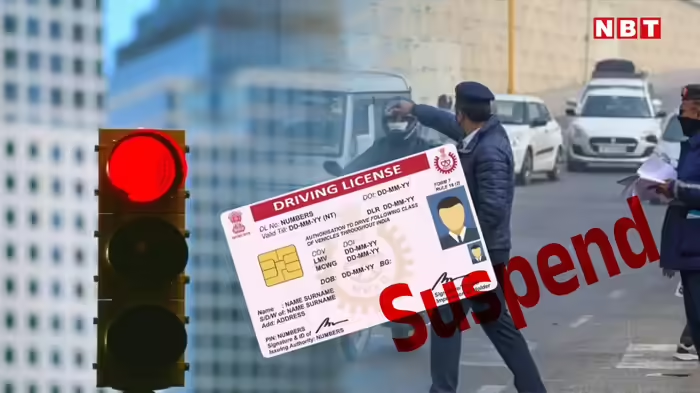
New Delhi: Driving licenses (DL) have become almost as essential as food, clothing, and shelter, especially for young Indians who rely on scooters and motorcycles for daily commuting. Now, the central government has amended rules related to driving licenses, making repeated traffic violations a serious matter. Under the new regulation, drivers caught violating traffic rules five or more times in a year may face DL suspension.
What the New Rule Says
The Ministry of Road Transport and Highways issued a notification last Wednesday stating that the rule is effective from 1 January 2026. According to the amendment:
- If a driver commits five or more traffic violations in a single year, their driving license may be suspended.
- Suspension means the driver cannot operate any vehicle for three months.
- The decision to suspend a license will be taken by the relevant licensing authority (RTO or DTO).
- Violations from previous years will not carry over; each year is counted separately.
Previous Rules vs. New Rule
Earlier, licenses could be suspended for 24 major violations, including vehicle theft, assault on passengers, kidnapping, overspeeding, overloading, or leaving vehicles in public places. These rules targeted actions that posed significant danger or inconvenience to the public.
The new amendment broadens the scope: even repeated minor offenses such as not wearing a helmet, skipping seat belts, or jumping red lights can lead to suspension if committed five times or more in a year.
Expert Opinions
Traffic law experts have offered mixed reactions:
- Anil Chikara, former Deputy Transport Commissioner of Delhi, called the measure “a step in the right direction” but cautioned that dangerous drivers often escape detection. He stressed the need for a standard operating procedure (SOP) so that violations recorded by CCTV can be effectively enforced in courts.
- Rohit Baluja, an expert on traffic law enforcement, criticized the amendment as “harsh and conceptually flawed.” He stated that suspension should be a secondary enforcement tool, applied only after fair, consistent, and reliable primary enforcement. Inconsistencies across states and revenue-driven enforcement could lead to misuse of discretion by authorities. He added that focusing on minor offenses does not address deeper issues like poor traffic engineering, insufficient signage, confusing road layouts, and lack of remedies for serious violations.
Additional Measures
The Ministry’s notification also outlines procedures for issuing, managing, and paying traffic challans:
- Authorized officers, either police or government representatives, can issue physical or e-challans, which may be auto-generated.
- Violators have 45 days to challenge a challan; if unchallenged, it is considered accepted.
- Payment must be made within 30 days of acceptance.
- If challenged, the authority must resolve the case within 30 days, failing which the challan will be canceled.
Discover more from SD NEWS agency
Subscribe to get the latest posts sent to your email.