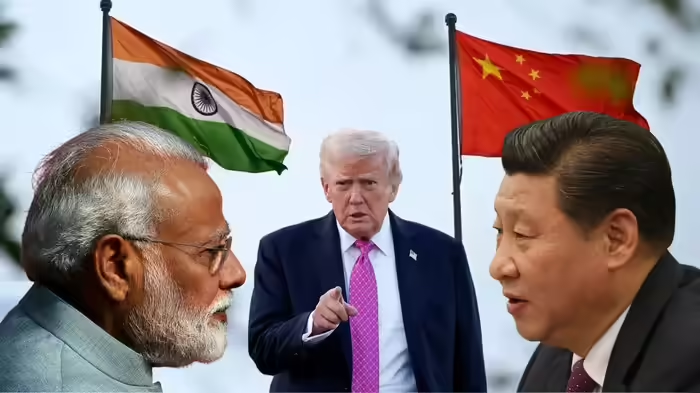
The United States may impose tariffs of up to 500% on imports from India, China, and Brazil, particularly targeting countries purchasing Russian oil. However, China could again receive preferential treatment, highlighting the starkly different approaches the U.S. is taking toward India and China.
India, China, and U.S.: A Divergent Approach
New Delhi: U.S. President Donald Trump has endorsed a bill allowing the United States to impose tariffs of up to 500% on countries buying Russian oil, including India, China, and Brazil. Following the news, Indian stock markets experienced a sharp decline. Analysts warn that such high tariffs could make exporting goods to the U.S. nearly impossible for India.
However, experts point out that India is likely to feel the brunt of these measures more than China, as the U.S. has historically offered Beijing relief in similar situations. The Trump administration’s approach is notably softer toward China while taking a harder stance on India.
Why the U.S. is Lenient Toward China
Despite longstanding trade tensions, the U.S. has tread carefully with China, primarily due to Beijing’s dominance in rare earth minerals. These minerals are critical for electric vehicles, semiconductors, defense equipment, and renewable energy technologies.
Although China is a major buyer of Russian oil, the U.S. has not imposed additional tariffs. Last year, on August 12, Trump postponed new duties on Chinese imports, maintaining tariffs at 30%—significantly lower than the 50% tariffs applied to Indian goods.
China’s Strategic Leverage
China has demonstrated its ability to respond decisively. It had previously restricted licenses for exporting rare earth elements and magnets to the U.S., disrupting key American industries, particularly in automotive and technology sectors. Even minor supply interruptions can delay production and destabilize supply chains.
Under pressure from domestic manufacturers, the U.S. had to engage in negotiations. The rare earth standoff showcased how China could retaliate in ways that would directly affect U.S. industrial output, making harsh tariffs a risky proposition for America.
Why India Faces Stricter Measures
Unlike China, India lacks similar strategic leverage. Since the Ukraine conflict began, India has emerged as a major buyer of discounted Russian oil. However, it does not control critical supply chains in a way that could significantly impact U.S. industries. Trump has repeatedly expressed frustration over India’s trade policies, accusing it of imposing high tariffs and barriers on American goods.
India currently faces a 50% tariff, primarily because of its substantial Russian oil imports. The U.S. views this as indirectly supporting Russia’s economy amid the Ukraine conflict. Washington has warned that if India does not alter its Russian oil purchases, tariffs could rise further—potentially up to 500%.
This policy difference underscores how strategic and economic leverage, rather than trade volumes alone, shapes America’s international tariff decisions.
Discover more from SD NEWS agency
Subscribe to get the latest posts sent to your email.