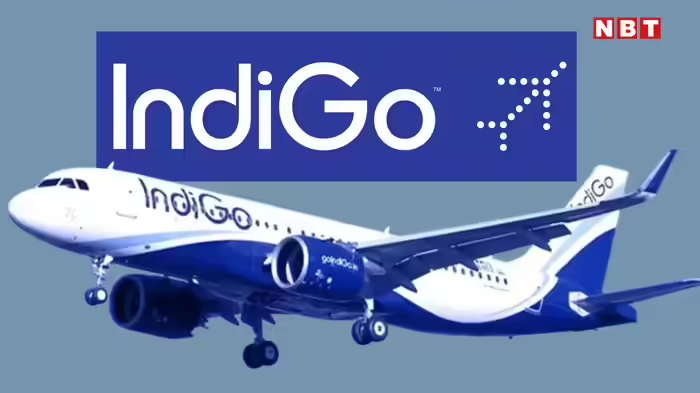
In the wake of massive flight cancellations by India’s largest airline, IndiGo, the government is taking steps to ensure passengers have more options. Recently, the Ministry of Civil Aviation fast-tracked the issuance of No Objection Certificates (NOC) to two new airlines, allowing them to operate in India’s skies.
IndiGo’s Recent Crisis
IndiGo currently commands about 65% of the domestic market share. However, thousands of its flights were recently cancelled, causing significant inconvenience to travelers. Learning from this, the government has expedited approvals for new players to enter the market, aiming to expand India’s aviation ecosystem beyond the dominance of IndiGo and Air India.
New Airlines Cleared
Union Aviation Minister Ram Mohan Naidu announced that over the past week, he met with teams from several aspiring airlines preparing to operate in India, including Shankh Air, Al Hind Air, and FlyExpress. Shankh Air had already received NOC approval earlier, while Al Hind Air and FlyExpress were granted NOCs this week. The government hopes to encourage at least five major airlines in the domestic market, providing passengers with better choices and fostering competition.
Aviation Operating Costs
India’s aviation sector is among the fastest-growing globally, with regional carriers like Star Air, India One Air, and Fly91 playing a crucial role in improving connectivity. However, high operating costs, jet fuel prices, and taxes remain major challenges for airlines.
An aviation expert noted, “In India, almost all stakeholders except the airlines themselves earn profits. That is why airlines often struggle to remain operational over decades. Starting a new airline is easier than sustaining it long-term due to high costs, taxes, management gaps, and lack of funding.”
Cost vs. Luxury
Globally, airline failures are not uncommon. Yet, in India, the cost-prohibitive environment makes operating airlines particularly challenging. A senior industry official added, “Air travel is no longer a luxury. It is imperative to make operating costs and taxes reasonable to sustain the sector.”
With these measures, the government aims to create a more competitive and passenger-friendly aviation market, reducing overreliance on a single dominant airline and improving overall service reliability.
Discover more from SD NEWS agency
Subscribe to get the latest posts sent to your email.