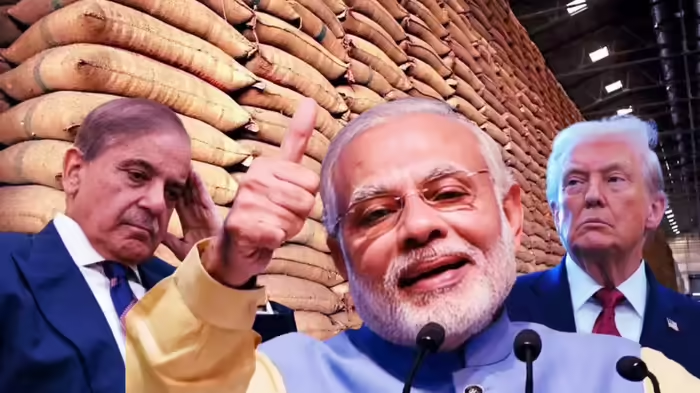
New Delhi: India’s government warehouses have amassed rice stocks at record levels, signaling a potential boost in exports. As of early December, the total rice inventory stood at 57.5 million tons, roughly 12% higher than last year, driven by accelerated procurement of paddy from farmers.
Global Export Implications
India, the world’s largest rice exporter, is now poised to increase its share in global markets. This surge in supply could put pressure on rice producers in countries such as Thailand, Vietnam, and Pakistan. The development comes amid recent statements by U.S. President Donald Trump, who hinted at imposing new tariffs on Indian rice and accused several countries, including India, of dumping rice in international markets. Indian rice entering global markets at competitive prices is expected to create significant ripples.
Government Procurement from Farmers
According to a Delhi-based dealer with a global trading firm, government agencies are purchasing large volumes of paddy from farmers. Open-market prices have been lower than the government’s Minimum Support Price (MSP), prompting heavy state procurement. Despite these large-scale purchases, exporters still have adequate stock to meet overseas demand.
Since the start of the current marketing year (1 October), the government has procured 42.2 million tons of paddy. While export demand is currently moderate, the weakening Indian rupee—which recently hit a record low—makes Indian rice more competitive internationally, enhancing profitability for exporters.
India Holds 40% of Global Rice Exports
India accounts for roughly 40% of global rice exports. All rice export restrictions imposed earlier were lifted last March. In the first ten months of 2025, rice exports rose by 37% year-on-year to 18.4 million tons. The Rice Exporters Association expects total exports for the year to reach a record 22.5 million tons, up about 25% from last year.
Ample Wheat Stocks Aid Price Stability
In addition to rice, India’s wheat stocks are at comfortable levels, giving the government greater leverage to control food grain prices effectively and maintain supply stability domestically.
Discover more from SD NEWS agency
Subscribe to get the latest posts sent to your email.