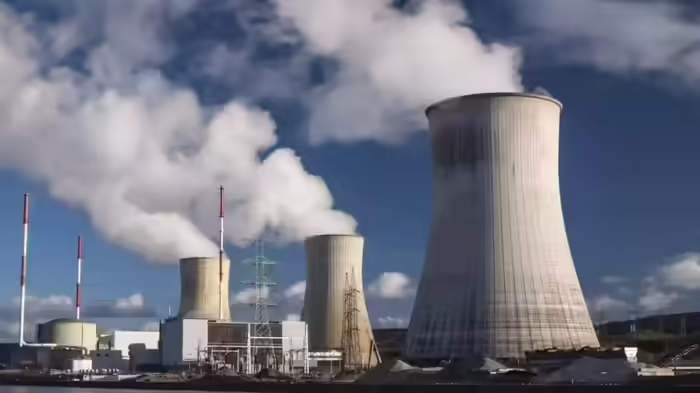
India’s economy is growing rapidly, but becoming a fully developed nation requires meeting critical energy demands while balancing environmental concerns. With industrial expansion increasing energy consumption and climate change posing a global challenge, the world is striving to find a balance between development and sustainability.
Nuclear Energy: A Reliable Solution
While countries invest heavily in renewable energy sources like solar and wind to reduce carbon emissions under the Paris Agreement, these sources face challenges of intermittency. Nuclear energy, in contrast, emerges as a reliable and carbon-free power source that complements renewables.
Nuclear power is primarily generated through fission, splitting Uranium-235 to release massive amounts of energy. A small amount of U-235 can produce electricity equivalent to thousands of tons of coal, without emitting greenhouse gases. Nuclear plants require less land, use minimal fuel, and provide predictable costs once operational. Although nuclear fusion is not yet commercially viable, global research continues actively.
Energy as a Strategic Priority
For India, energy is not merely a utility—it is a strategic asset. Dependence on foreign technology or energy can create geopolitical vulnerabilities. As one of the world’s fastest-growing economies, India needs a reliable energy supply to support manufacturing, digital infrastructure, and other key sectors. Nuclear energy can fulfill this critical requirement.
India’s Nuclear Journey
India’s nuclear program, initiated in the 1950s by Dr. Homi J. Bhabha, envisioned energy independence through a three-stage plan:
- Pressurized Heavy Water Reactors (PHWRs) using natural uranium.
- Fast Breeder Reactors (FBRs).
- Thorium-based reactors leveraging India’s abundant thorium reserves.
Currently, India operates 25 nuclear reactors with a total capacity of 8,780 MW, with multiple projects underway. Nuclear science has not only powered electricity generation but also contributed to national development—advancing domestic radiotherapy, improving cancer treatment, enhancing agricultural productivity, and benefiting industry and the environment.
Challenges Ahead
The government has prioritized nuclear energy, aiming for 100 GW of nuclear capacity by 2047. A 20,000 crore INR fund has been allocated for Small Modular Reactors (SMRs), and legal amendments are proposed to allow private sector participation while maintaining safety standards. These initiatives have accelerated atomic research and development.
However, challenges remain: achieving targets requires substantial investment, skilled manpower, and overcoming the public’s skepticism about nuclear safety. Despite these hurdles, nuclear energy remains safer and more reliable than coal or oil for long-term national energy security.