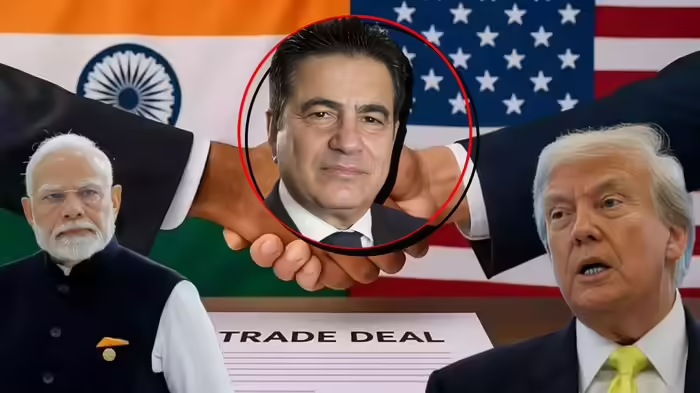
New Delhi: India and the United States are expected to finalize a comprehensive trade agreement within the next three months, according to Mukesh Aghi, President and CEO of the U.S.-India Strategic Partnership Forum (USISPF). Speaking at the World Economic Forum (WEF) in Davos, Aghi emphasized that American companies are not planning to reduce investment in India or relocate their supply chains, signaling strong bilateral economic confidence.
Trade Talks in Final Stage
Aghi highlighted that negotiations between the two countries have passed through multiple rounds and are now in the final stages. He added that India and the U.S. are working closely on complex issues such as agriculture, which are technically more intricate than prior agreements. Aghi expressed optimism that a trade deal could be signed within three months, reflecting the deepening strategic and economic partnership between the two nations.
Confidence in India
Addressing concerns about tariffs and policy unpredictability, Aghi acknowledged that many countries find it challenging to negotiate with governments considered volatile on trade matters. However, he stressed that the strength of any agreement should be evaluated based on its substance and mutual commitments, rather than political statements.
Investment Momentum Remains Strong
Aghi noted that discussions with over 100 American and global CEOs revealed that no company plans to scale back investment or move supply chains elsewhere. He described India not just as a large market, but as a source of global competitiveness, citing more than 2,000 global capability centers in India, 60% of which are American, generating significant intellectual property.
Focus on Talent and Strategic Partnership
The CEO also highlighted recent major U.S. investments in India, particularly in AI, cloud computing, and data infrastructure, reflecting corporate confidence in India’s growth story. He acknowledged ongoing reforms but called for further progress at the state level to simplify licensing and ease business operations.
Aghi emphasized that Indian talent plays a critical role in the U.S. economy, noting systemic challenges such as H-1B visas are shared globally. He reaffirmed that Indian professionals are always welcomed and essential to economic collaboration.
Broader Strategic Ties
Beyond trade, Aghi described India-U.S. relations as rooted in business, defense, technology cooperation, and deep diaspora connections. He urged both countries to focus on tangible shared interests rather than political noise, underscoring the long-term potential of the partnership.
Discover more from SD NEWS agency
Subscribe to get the latest posts sent to your email.