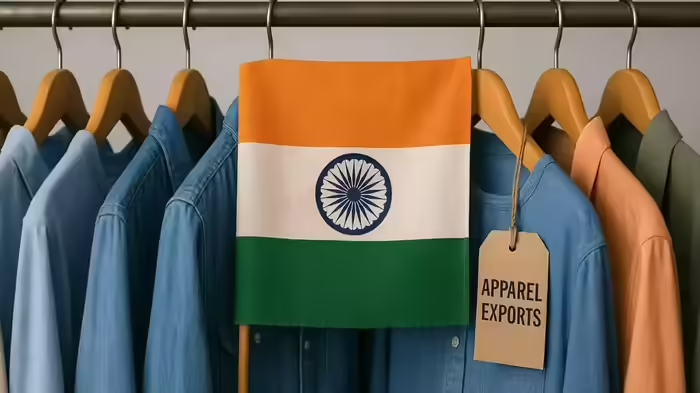
India is making significant strides in strengthening its trade relations with the United Kingdom and the European Union, with free trade agreements (FTAs) expected to receive final approval soon. This development could provide a major boost to India’s textile industry while delivering a setback to Bangladesh’s export dominance.
According to the Economic Times, buyers from major European and UK clothing brands, including Marks & Spencer, Primark, Next, and Mothercare, have already begun engaging with Indian suppliers. Exporters report that these companies are increasingly inspecting and evaluating factories in textile hubs such as Tirupur in Tamil Nadu. The move comes amid supply chain uncertainties in Bangladesh and expectations of reduced tariffs under the new FTAs, prompting buyers to either shift or increase purchases from India.
Increased Sourcing from India
K.M. Subramanyan, President of the Tirupur Exporters Association, stated that brands like M&S, C&A, Primark, Mothercare, Next, and Duns are visiting Tirupur to conduct technical audits, evaluate new factories, and explore the possibility of sourcing more products from existing suppliers. Brands already sourcing from India are also keen to expand their purchases.
Understanding the India-UK FTA
Under the proposed India-UK FTA, tariffs on 99% of Indian exports to the UK would be eliminated. The agreement will come into effect once it receives approval from the UK Parliament, expected within the next few months.
Impact on Bangladesh
Political instability in Bangladesh has led European buyers to reconsider their sourcing strategies and shift attention to Indian imports. Vijay Agrawal, Chairman of the Cotton Textiles Export Promotion Council, noted that buyers like C&A procure large volumes of jeans and bottoms from Bangladesh but are now exploring the possibility of partially moving sourcing to India. Some UK buyers have even expressed interest in transferring production entirely from Bangladesh to India.
Bridging the Cost Gap
Currently, importing from India is costlier than Bangladesh due to tariffs. Bangladesh has enjoyed duty-free access to European markets for nearly 25 years, whereas Indian garments face tariffs of 12.5% in the EU and 9.6% in the UK. Once the FTAs come into effect, these duties on Indian textiles will be eliminated, leveling the playing field with Bangladesh and potentially reshaping the global sourcing landscape.
Discover more from SD NEWS agency
Subscribe to get the latest posts sent to your email.