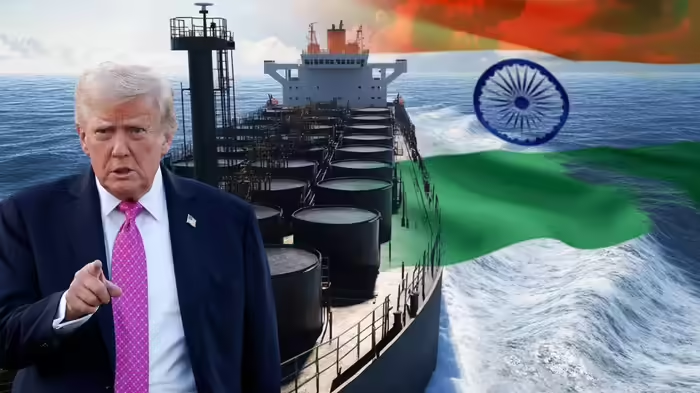
New Delhi: India is facing increasing pressure to make a crucial decision regarding its imports of Russian crude oil. The Global Trade Research Initiative (GTRI) has warned that the situation is reaching a point where no middle ground remains.
The pressure stems from the United States, which has threatened higher tariffs on Indian goods if India continues buying oil from Russia. On January 4, U.S. President Donald Trump warned that Washington could raise tariffs on Indian exports unless India stops its Russian oil purchases. Currently, Indian goods already face import duties totaling around 50%, half of which are directly linked to India’s crude oil imports from Russia.
U.S. Legislative Moves
U.S. Senator Lindsey Graham is reportedly working on legislation to impose significant secondary tariffs on countries that continue to purchase oil and gas from Russia. These tariffs would come into effect only if Russia does not agree to a ceasefire in Ukraine within 50 days. If passed, the law could make trading with the U.S. extremely costly for nations deemed to be financially supporting Russia’s war efforts.
India’s Response So Far
India has taken measured steps in response. Following U.S. sanctions on Russian oil companies Rosneft and Lukoil in October, Reliance Industries and several government refineries indicated they would reduce purchases to avoid secondary sanctions. While the overall volume of Russian oil imports has decreased, India has not completely halted imports, leaving the country in what GTRI calls a “strategic grey zone”—a situation of ambiguity with no clear safety from external pressures.
Options Ahead
GTRI warns that this uncertainty cannot continue indefinitely. India now faces a clear choice:
- Stop buying oil from Russia entirely: This would require a firm decision backed by clear domestic policy.
- Continue buying from non-sanctioned Russian suppliers: India would need to openly declare this policy and provide supporting data.
- Purchase from sanctioned companies as well: Any such approach must be clearly articulated to avoid ambiguity.
According to GTRI, there is no longer room for a middle path. Even a complete halt to Russian oil imports may not ease U.S. pressure, as Washington could shift focus to other trade-related issues such as agriculture, dairy access, digital trade, or data governance.
Discover more from SD NEWS agency
Subscribe to get the latest posts sent to your email.