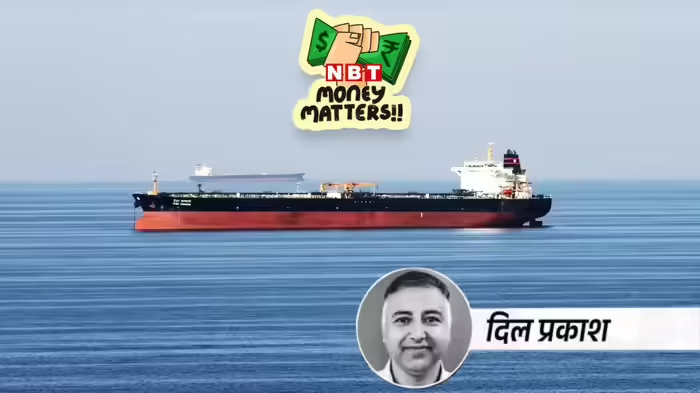
After the outbreak of the Ukraine war, Western countries imposed sanctions on Russian oil. Russia, however, has found an unprecedented workaround. Its ecosystem is so sophisticated that it is extremely difficult for the U.S. and other Western nations to track. India and China are also reaping benefits from this system.
Shadow Oil Fleets
Following the Ukraine war, Russia has established a large fleet of ships to transport oil. Despite recent reductions in India’s purchases, Russia remains the country’s largest crude oil supplier. Western nations, including the U.S., continue to sanction Russian oil. Meanwhile, the U.S. has started selling Venezuelan oil following sanctions on Iran. This brings renewed focus to “shadow fleets” or “dark fleets”—networks of tankers used to transport sanctioned oil from Russia, Iran, and Venezuela. Estimates suggest that shadow fleets account for nearly 18.5% of the total global tanker capacity, highlighting the scale of this covert operation.
Russia is the primary player in this shadow oil trade. These fleets often use older vessels, most of which are owned by Western companies. To bypass international sanctions, they employ various illegal tactics such as flying false flags, sending fake location data, frequently changing vessel names, and switching off satellite transponders. The ownership structures are so complex that tracking these ships is extremely challenging. Since Russia’s invasion of Ukraine, the number of such vessels has surged. These ships transport oil from Russia’s Baltic and Black Sea ports, generating billions of dollars in annual revenue for the country.
Fleet Size and Operations
According to Kpler estimates, there are over 3,300 ships operating as part of the global shadow fleet. Recent reports indicate a significant increase in vessel movement around Singapore, often carrying sanctioned oil and military equipment. Transfers between ships typically occur at night near the Malaysian coast, posing serious safety and environmental risks. Most of these vessels are operated through shell companies based in countries like Dubai, making the tracing of ownership and insurance details even more difficult. Fuel transfers between ships at sea—known as bunkering—further obscure the origin of the cargo, while sometimes mixing shipments to create confusion over the oil’s true source.
Sellers and Buyers
Russia and Iran are key sellers of sanctioned crude, while India and China emerge as the largest buyers. According to Kpler, during the last three months of 2025, approximately 20% of crude imported by India and China came via shadow fleets. S&P reports that China is the largest buyer of Iranian crude, transported through a deliberately opaque chain of vessel transfers in Southeast Asia before reaching Chinese ports.
The shadow fleet gained attention after the Ukraine war began in 2022, as Western sanctions prompted Russia to develop its dark fleet. From just 97 vessels in 2022, the fleet grew to 3,313 by the end of 2025. Last year alone, this fleet transported roughly $100 billion worth of crude, accounting for 6–7% of the global oil flow. Western countries have also accused Russia of using these fleets for espionage, monitoring U.S. and allied activities at sea.
Why It’s Hard to Track
In November 2025, of the 299 million barrels of crude transported via shadow fleets, 63 million barrels were Russian. Other sanctioned crude exporters include Saudi Arabia and the U.S. Despite 686 vessels and 196 companies facing sanctions for illegal crude transport in 2025, the shadow fleet remains not only large but highly resilient, supported by a robust ecosystem that is extremely difficult to penetrate.
India is also a major importer of crude via the shadow fleet. Estimates suggest that 9.5% of Russian crude imported to India in 2024 came through shadow fleets. Following the imposition of U.S. tariffs in April 2024, India reduced its official imports of Russian crude, with Russia’s share in India’s crude imports declining from a high of 45% in July 2024 to 32% in December 2025.
Discover more from SD NEWS agency
Subscribe to get the latest posts sent to your email.