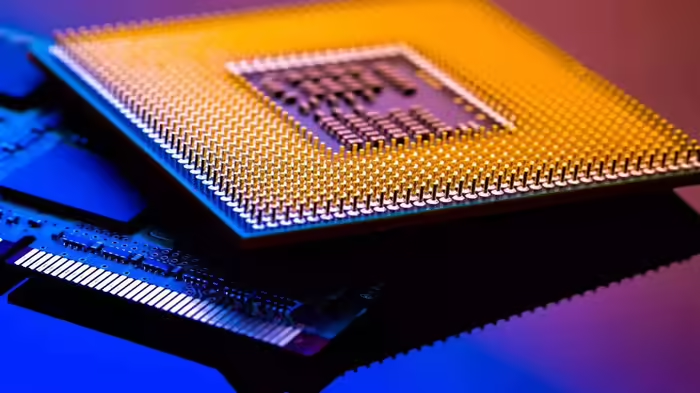
The Indian government is aiming to produce advanced 3-nanometer chips used in modern smartphones, computers, and other high-tech devices by 2032, Union Minister Ashwini Vaishnaw announced on Tuesday. The initiative will focus on six key chip categories under the Design-Linked Incentive (DLI) Scheme, giving domestic companies greater control over 70–75% of technology product development.
Focus Areas
During a meeting with 24 selected chip design companies, Minister Vaishnaw said the government will concentrate on six major systems:
- Compute
- Radio Frequency (RF)
- Networking
- Energy
- Sensors
- Memory
“This approach will help the semiconductor design ecosystem in India grow holistically,” Vaishnaw said. He emphasized that while India currently focuses on chip design, the goal is to scale manufacturing capabilities to 3-nanometer technology by 2032.
Strategic Impact
The government plans to encourage academic institutions and industry players to bring new ideas, innovative solutions, and advanced research into these six chip categories. By 2029, India aims to develop significant domestic design and manufacturing capabilities for chips that are critical for 70–75% of applications across sectors.
Minister Vaishnaw highlighted that every sector—from computing and networking to energy and sensors—will require combinations of these six chip types. The move is expected to strengthen India’s semiconductor ecosystem, reduce dependency on imports, and position the country as a global player in advanced chip manufacturing.
Discover more from SD NEWS agency
Subscribe to get the latest posts sent to your email.