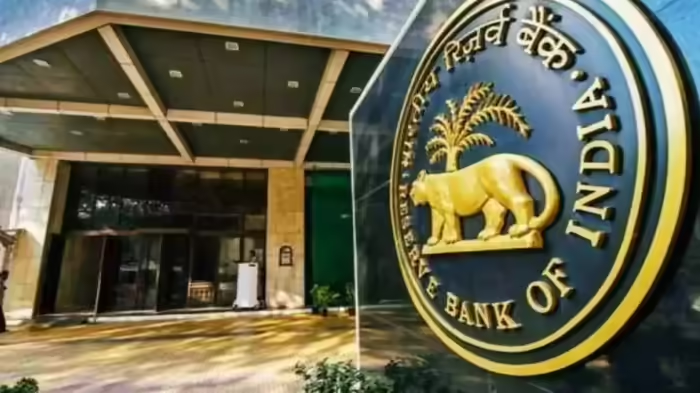
New Delhi: The Reserve Bank of India (RBI) is likely to bring more good news for the public in February, with reports suggesting a potential cut in interest rates. According to a report by Union Bank of India, the RBI may reduce the repo rate by 25 basis points (bps) in its upcoming monetary policy meeting, bringing the benchmark rate down to 5%. The next monetary policy committee (MPC) meeting is scheduled for 4–6 February 2026.
RBI’s Soft Approach
The report highlights that given the RBI’s accommodative stance, there is room for an additional 25 bps cut in February or April 2026. The central bank has repeatedly noted that inflation is stable and price pressures are easing. If the impact of gold prices on inflation (around 50 bps) is adjusted, inflationary pressure appears even lower.
Report Insights
The Union Bank report states: “We see scope for a final 25 bps rate cut in February or April 2026. Considering the central bank’s dovish policy stance, a repo rate of 5% in February 2026 cannot be ruled out, although the exact timing of the final cut remains uncertain.”
However, the report also cautions that the timing of the final rate cut is dependent on upcoming data, including the Consumer Price Index (CPI) and revisions to the base year for GDP. The MPC may adopt a ‘wait and watch’ approach to reassess inflation and growth trends once revised data is available.
Earlier Cut in December
The RBI had already reduced the repo rate earlier this month. In its December monetary policy meeting, the MPC announced a 25 bps cut, bringing the repo rate to 5.25%. RBI Governor Sanjay Malhotra announced this decision after the three-day MPC meeting held from 3–5 December 2025.
Benefits for the Public
A rate cut makes loans cheaper, lowering interest costs on home loans and other borrowings. Existing borrowers can also benefit from reduced EMIs, leading to significant savings. On the other hand, fixed deposit (FD) rates may decrease, resulting in lower returns for FD investors. The exact change in loan or FD interest rates depends on individual banks.
Discover more from SD NEWS agency
Subscribe to get the latest posts sent to your email.