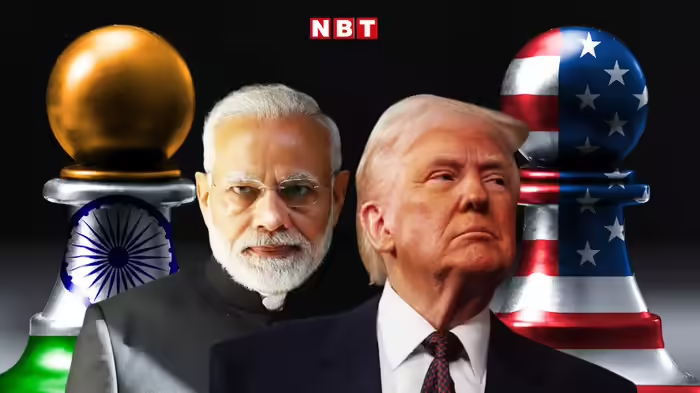
New Delhi: After a long wait, India and the United States have finalized a trade deal. U.S. President Donald Trump announced that tariffs on Indian goods will be reduced from 50% to 18%, providing much-needed relief to Indian exporters. The deal comes at a crucial time for sectors such as garments, leather, and footwear, which had been worried about the upcoming summer export season. While some smaller Indian companies had paused exports to the U.S., larger firms were offering heavy discounts to sustain their business.
Key Highlights of the Deal
- The 25% additional tariff on Indian imports linked to Russia’s oil purchases will also be removed.
- President Trump confirmed that India has agreed to halt Russian oil imports.
- The deal takes into account India’s concerns while addressing U.S. priorities as well.
India-US Trade at a Glance
The U.S. is India’s largest trading partner, with bilateral trade totaling $131.84 billion. India currently enjoys a trade surplus with the U.S. Negotiations for the agreement have been ongoing since February last year, with both countries targeting a $500 billion trade volume by 2030.
Sectoral Impact
With reduced tariffs, Indian products will become more competitive in the U.S. market:
- Garments and Textiles: Indian apparel will now face 18% tariffs, lower than Bangladesh and Sri Lanka at 20%, giving Indian exporters an edge.
- Carpets: Previously losing market share due to 50% tariffs, Indian carpets will now be cheaper than Turkish alternatives.
- Seafood and Jewelry: Indian shrimp and jewelry exporters have welcomed the tariff cut, which improves price competitiveness.
Competing with China
Indian goods will also become more price-competitive compared to Chinese products, which face 34% tariffs in the U.S. However, tariffs on auto parts and metals will remain unchanged. Exporters are awaiting detailed guidelines from the trade deal, as no joint statement has yet been issued.
Diversification Opportunities
This deal complements recent trade agreements India has signed with the UK and the European Union, allowing exporters to diversify markets. Between April and November, India’s exports to the U.S. rose 11.3% to $59 billion, with smartphone exports doubling to $16.7 billion. Previously imposed tariffs of 25% on Indian goods, including additional duties linked to Russian oil purchases, had limited competitiveness. Electronics and pharma exports, which were exempt from a 40% tariff, continue to benefit from favorable trade terms.
Outlook
The reduction in U.S. tariffs is expected to provide a strong boost to Indian exporters in garments, leather, footwear, carpets, seafood, jewelry, and other sectors, enhancing their competitiveness and market share in the world’s largest consumer market.
Discover more from SD NEWS agency
Subscribe to get the latest posts sent to your email.