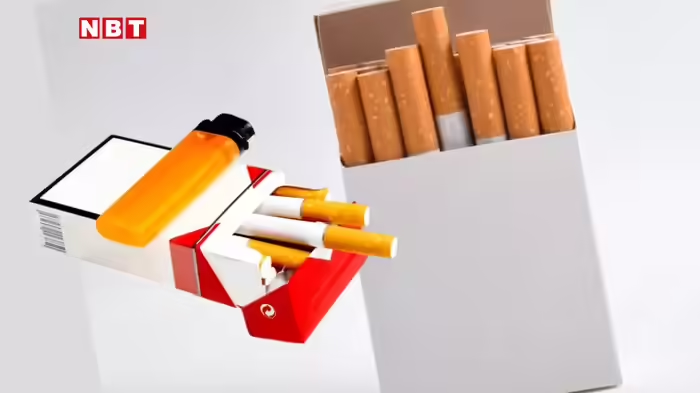
New Delhi: Cigarettes, tobacco products and pan masala will become significantly more expensive starting February 1, following the implementation of new taxation measures approved by Parliament in December. The government has introduced additional excise duty on cigarettes and tobacco products, along with a health cess on pan masala, replacing the earlier GST compensation cess framework.
The new levies will be imposed over and above the highest GST rate of 40 percent, intensifying the tax burden on so-called “sin goods.” These changes come after the GST Council’s decision in September 2025 to discontinue the compensation cess mechanism.
Sharp Increase in Cigarette Prices
Under the amended Central Excise Act, cigarette taxation will now be based on length and structure, with excise duty ranging from ₹2.05 to ₹8.50 per stick:
- Unfiltered cigarettes (up to 65 mm): ₹2.05 per stick
- Filtered cigarettes (up to 65 mm): ₹2.10 per stick
- Cigarettes measuring 65–70 mm: ₹3.60–₹4.00 per stick
- Cigarettes measuring 70–75 mm: ₹5.40 per stick
- Specially designed or premium cigarettes: Up to ₹8.50 per stick
Most mainstream cigarette brands fall within the mid-range slabs, which will still result in an immediate and noticeable price hike for consumers.
Higher Excise on Chewing Tobacco and Gutkha
Chewing tobacco, zarda and similar products will now attract 82 percent excise duty, while gutkha will be taxed at 91 percent. The tax rate on pan masala will remain unchanged at 88 percent, but the method of assessment will shift.
From February 1, taxation will be calculated based on the declared retail sale price (MRP) printed on the packet, rather than production volume. This move aims to curb tax evasion and improve compliance.
Stricter Compliance for Pan Masala Manufacturers
Pan masala manufacturers will be required to obtain fresh registration under the Health and National Security Cess law. They must also install functional CCTV systems covering all packing machines and retain footage for at least 24 months. Manufacturers are required to disclose the number and capacity of machines to excise authorities. Tax relief may be claimed if any machine remains non-operational for a continuous period of 15 days or more.
Impact on Consumption
According to Crisil Ratings, the higher tax burden is expected to have a direct impact on demand. Cigarette sales are projected to decline by 6–8 percent in the next financial year, reflecting both higher prices and increased regulatory scrutiny.
The government maintains that the revised tax structure will not only boost revenue for both the Centre and states but also support public health objectives by discouraging the consumption of harmful products.
Discover more from SD NEWS agency
Subscribe to get the latest posts sent to your email.