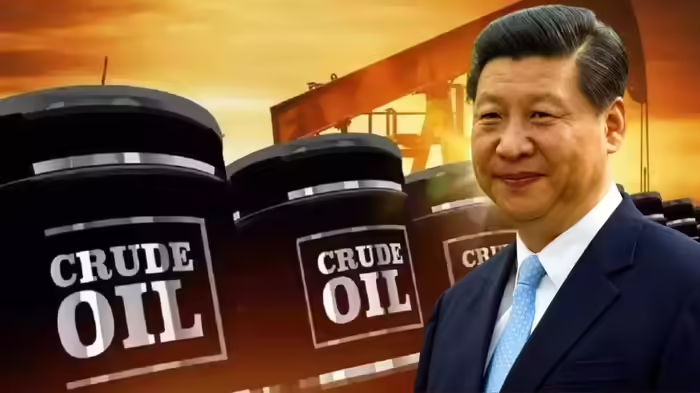
New Delhi: In the global oil market, China is increasingly asserting itself as the new ‘king,’ challenging the traditional dominance of OPEC+ in setting crude oil prices. Historically, oil prices were largely influenced by OPEC+ nations, which could manipulate production to achieve their desired price levels. However, in 2025, this dynamic has shifted.
As the world’s largest oil importer, China has used its purchasing power to establish an implicit floor and ceiling for crude prices by adjusting its strategic reserves. By buying more when prices fall and slowing purchases when prices rise, China has effectively influenced global pricing trends.
According to a Reuters report, when OPEC+ increased production in April 2025 after cutting output in 2022, global prices began to decline. With concerns over oversupply, OPEC+ has decided to maintain production levels in the first quarter of the next year, leaving China to absorb the additional oil.
China Keeps Storage Data Confidential
A key uncertainty for the oil market in 2026 is China’s strategy. Beijing does not publicly disclose its strategic or commercial oil storage, making it difficult to estimate actual flows in and out of the market or predict future policy. In 2025, it was clear that China’s purchases exceeded domestic consumption and refinery exports, indicating substantial stockpiling.
China’s Strategic Moves in 2025
In the first eleven months of 2025, China accumulated nearly 980,000 barrels per day (bpd) of surplus oil. Total imports and domestic production reached 15.8 million bpd, while refinery consumption was 14.82 million bpd. This additional stock has been building since March, while January and February saw net withdrawals from refineries. Analysts note a strong correlation between price movements and China’s buying behavior—purchases increase when prices fall and decrease when prices rise.
Looking Ahead to 2026
China’s stockpiling kept Brent crude prices within a narrow range around $65 per barrel in the latter half of 2025. Estimates of China’s total oil reserves vary between 1 billion and 1.4 billion barrels, with additional storage capacity being added. State-owned oil companies Sinopec and CNOOC have added at least 169 million barrels of storage across 11 locations during 2025–2026.
If China continues to expand its strategic reserves, it could support a global minimum price for oil while moderating excessive price spikes by limiting imports when prices rise too high. This dynamic could redefine oil market control, making Beijing a key player in global pricing strategy.
Discover more from SD NEWS agency
Subscribe to get the latest posts sent to your email.