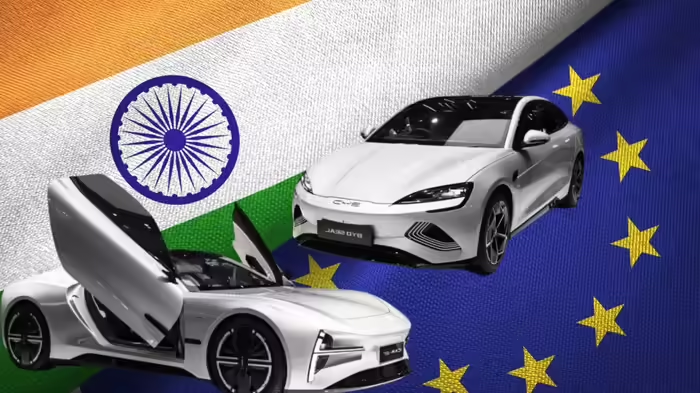
As India and the European Union move closer to finalising a long-pending trade agreement, concerns are mounting within India’s automobile industry. Leading global carmakers, including BMW, have cautioned that Chinese automobile manufacturers could exploit the proposed deal to gain indirect access to the Indian market, potentially undermining existing investments.
According to a report by The Times of India, BMW has urged the Indian government to incorporate strong safeguard measures before signing the India–EU Free Trade Agreement (FTA). The company fears that without adequate protections, the deal could open loopholes allowing non-European players, particularly Chinese automakers, to enter India through the EU route.
Automobile Market at the Centre of Negotiations
Market access for automobiles remains one of the most sensitive and critical components of the India–EU trade talks, which are now in their final stages. While the agreement is expected to lower tariffs and boost bilateral trade, industry leaders warn that it could unintentionally create backdoor entry points for companies outside Europe.
BMW’s Warning
BMW Group India President and CEO Hardeep Singh Brar said that the agreement could lead to an influx of low-cost cars into the Indian market. Such a development, he argued, would disadvantage manufacturers that have already made substantial investments in local production and supply chains.
Brar pointed out that production costs in many overseas markets are significantly higher than in India. If small and affordable vehicles are allowed to enter India without restrictions, competing purely on price would become extremely challenging for existing players.
Proposed Safeguards
To address these concerns, BMW has suggested that trade benefits under the agreement should apply only to vehicles priced above a certain threshold. Brar proposed a price band ranging between €20,000 (approximately ₹21 lakh) and €30,000 (around ₹32 lakh).
According to him, such a measure would benefit buyers in the luxury segment without disrupting the mass market or harming domestic manufacturing. It would also ensure that the agreement supports premium imports rather than triggering price wars in the entry-level segment.
Domestic Carmakers Echo Concerns
The apprehension is not limited to foreign luxury brands. Indian automobile manufacturers have also appealed to the government to include robust protective clauses in the trade deal. They have warned that Chinese electric vehicle (EV) makers, in particular, could use the agreement as a gateway into the Indian market.
Industry representatives have called for safeguards such as higher price thresholds, limited import quotas, and strict value-addition norms to prevent circumvention and protect domestic industry interests.
Balancing Trade and Protection
As negotiations near completion, policymakers face the challenge of striking a balance between expanding trade ties with the EU and safeguarding India’s automobile ecosystem. The final shape of the agreement will be closely watched by both global and domestic players, given its potential long-term impact on investment, competition, and manufacturing in India.
Discover more from SD NEWS agency
Subscribe to get the latest posts sent to your email.