Bridging the Wealth Gap: How Life for India’s Poor Has Improved Over the Last Decade
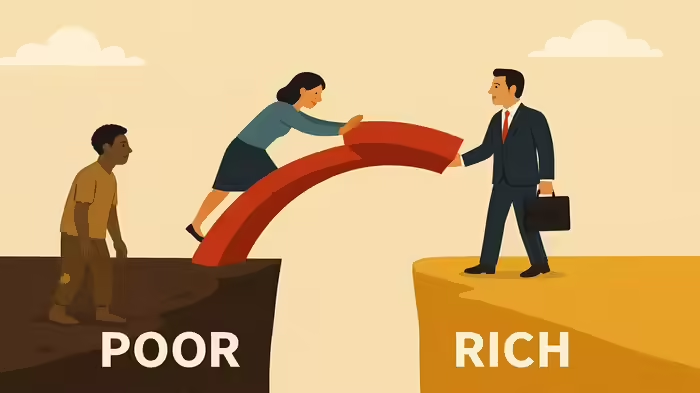
While India’s richest 1% still hold nearly 40% of the nation’s wealth, recent data shows that the gap between the rich and the poor has narrowed in several key aspects over the past decade. The country’s rapid economic growth and targeted policy interventions have enabled millions of lower-income households to access goods and services that were once considered luxuries.
Vehicles in Rural and Urban Households
About ten years ago, fewer than one in ten of India’s poorest rural families owned a bicycle, scooter, or car. Today, nearly half of these households have at least one vehicle. Urban areas show an even higher rate of vehicle ownership. Comparing the top 20% and bottom 40% of households by vehicle ownership indicates a notable reduction in the disparity between rich and poor. Cities, in particular, have seen faster convergence than rural areas.
Mobile Phones: A Universal Trend
Mobile phone penetration has skyrocketed across both rural and urban India. In most states, 95–98% of households now own at least one mobile device. Only a few states lag behind in mobile adoption, highlighting how technology has become a great equalizer across social and economic divides.
Fridges and Televisions: From Luxury to Necessity
Once considered luxury items, refrigerators have become increasingly common among lower-income families. While some states have surpassed the national average in fridge ownership, states such as Jharkhand, Bihar, Odisha, Madhya Pradesh, Assam, and Chhattisgarh still report that fewer than one in ten households own one. Similarly, television ownership among the bottom 40% of families has grown significantly, though certain urban areas have seen slight declines in TV sales.
Conclusion
These trends reflect a broader improvement in the standard of living for India’s poorer households. Greater access to vehicles, appliances, and mobile technology indicates that, quietly but steadily, the wealth gap is narrowing. While significant disparities remain, these gains over the past decade demonstrate progress toward a more inclusive economy, aligning with India’s long-term goal of becoming a developed nation by 2047.Bridging the Wealth Gap: How Life for India’s Poor Has Improved Over the Last Decade
While India’s richest 1% still hold nearly 40% of the nation’s wealth, recent data shows that the gap between the rich and the poor has narrowed in several key aspects over the past decade. The country’s rapid economic growth and targeted policy interventions have enabled millions of lower-income households to access goods and services that were once considered luxuries.
Vehicles in Rural and Urban Households
About ten years ago, fewer than one in ten of India’s poorest rural families owned a bicycle, scooter, or car. Today, nearly half of these households have at least one vehicle. Urban areas show an even higher rate of vehicle ownership. Comparing the top 20% and bottom 40% of households by vehicle ownership indicates a notable reduction in the disparity between rich and poor. Cities, in particular, have seen faster convergence than rural areas.
Mobile Phones: A Universal Trend
Mobile phone penetration has skyrocketed across both rural and urban India. In most states, 95–98% of households now own at least one mobile device. Only a few states lag behind in mobile adoption, highlighting how technology has become a great equalizer across social and economic divides.
Fridges and Televisions: From Luxury to Necessity
Once considered luxury items, refrigerators have become increasingly common among lower-income families. While some states have surpassed the national average in fridge ownership, states such as Jharkhand, Bihar, Odisha, Madhya Pradesh, Assam, and Chhattisgarh still report that fewer than one in ten households own one. Similarly, television ownership among the bottom 40% of families has grown significantly, though certain urban areas have seen slight declines in TV sales.
Conclusion
These trends reflect a broader improvement in the standard of living for India’s poorer households. Greater access to vehicles, appliances, and mobile technology indicates that, quietly but steadily, the wealth gap is narrowing. While significant disparities remain, these gains over the past decade demonstrate progress toward a more inclusive economy, aligning with India’s long-term goal of becoming a developed nation by 2047.Bridging the Wealth Gap: How Life for India’s Poor Has Improved Over the Last Decade
While India’s richest 1% still hold nearly 40% of the nation’s wealth, recent data shows that the gap between the rich and the poor has narrowed in several key aspects over the past decade. The country’s rapid economic growth and targeted policy interventions have enabled millions of lower-income households to access goods and services that were once considered luxuries.
Vehicles in Rural and Urban Households
About ten years ago, fewer than one in ten of India’s poorest rural families owned a bicycle, scooter, or car. Today, nearly half of these households have at least one vehicle. Urban areas show an even higher rate of vehicle ownership. Comparing the top 20% and bottom 40% of households by vehicle ownership indicates a notable reduction in the disparity between rich and poor. Cities, in particular, have seen faster convergence than rural areas.
Mobile Phones: A Universal Trend
Mobile phone penetration has skyrocketed across both rural and urban India. In most states, 95–98% of households now own at least one mobile device. Only a few states lag behind in mobile adoption, highlighting how technology has become a great equalizer across social and economic divides.
Fridges and Televisions: From Luxury to Necessity
Once considered luxury items, refrigerators have become increasingly common among lower-income families. While some states have surpassed the national average in fridge ownership, states such as Jharkhand, Bihar, Odisha, Madhya Pradesh, Assam, and Chhattisgarh still report that fewer than one in ten households own one. Similarly, television ownership among the bottom 40% of families has grown significantly, though certain urban areas have seen slight declines in TV sales.
Conclusion
These trends reflect a broader improvement in the standard of living for India’s poorer households. Greater access to vehicles, appliances, and mobile technology indicates that, quietly but steadily, the wealth gap is narrowing. While significant disparities remain, these gains over the past decade demonstrate progress toward a more inclusive economy, aligning with India’s long-term goal of becoming a developed nation by 2047.While India’s richest 1% still hold nearly 40% of the nation’s wealth, recent data shows that the gap between the rich and the poor has narrowed in several key aspects over the past decade. The country’s rapid economic growth and targeted policy interventions have enabled millions of lower-income households to access goods and services that were once considered luxuries.
Vehicles in Rural and Urban Households
About ten years ago, fewer than one in ten of India’s poorest rural families owned a bicycle, scooter, or car. Today, nearly half of these households have at least one vehicle. Urban areas show an even higher rate of vehicle ownership. Comparing the top 20% and bottom 40% of households by vehicle ownership indicates a notable reduction in the disparity between rich and poor. Cities, in particular, have seen faster convergence than rural areas.
Mobile Phones: A Universal Trend
Mobile phone penetration has skyrocketed across both rural and urban India. In most states, 95–98% of households now own at least one mobile device. Only a few states lag behind in mobile adoption, highlighting how technology has become a great equalizer across social and economic divides.
Fridges and Televisions: From Luxury to Necessity
Once considered luxury items, refrigerators have become increasingly common among lower-income families. While some states have surpassed the national average in fridge ownership, states such as Jharkhand, Bihar, Odisha, Madhya Pradesh, Assam, and Chhattisgarh still report that fewer than one in ten households own one. Similarly, television ownership among the bottom 40% of families has grown significantly, though certain urban areas have seen slight declines in TV sales.
Conclusion
These trends reflect a broader improvement in the standard of living for India’s poorer households. Greater access to vehicles, appliances, and mobile technology indicates that, quietly but steadily, the wealth gap is narrowing. While significant disparities remain, these gains over the past decade demonstrate progress toward a more inclusive economy, aligning with India’s long-term goal of becoming a developed nation by 2047.
Discover more from SD NEWS agency
Subscribe to get the latest posts sent to your email.