
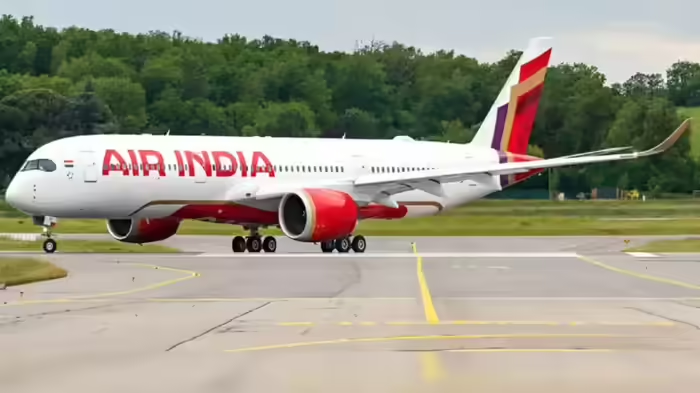
Air India is expected to suffer a massive financial setback this year, with losses estimated at ₹150 billion (approximately $1.6 billion) for the financial year ending March 31. A deadly aircraft accident and prolonged airspace restrictions have dealt a severe blow to the national carrier’s recovery plans.
The projected loss marks a significant reversal for Air India, which is jointly owned by the Tata Group and Singapore Airlines. The airline had been hoping to narrow losses and move closer to profitability, but those expectations now appear increasingly unrealistic.
Crash Shatters Turnaround Momentum
The setback follows a tragic Dreamliner crash in June, which claimed the lives of more than 240 people. The incident not only resulted in immense human loss but also severely damaged the airline’s brand and operational confidence, undermining years of restructuring efforts.
Industry experts say the crash disrupted fleet utilisation, increased regulatory scrutiny, and dented passenger trust—factors that continue to weigh heavily on revenues.
Airspace Closure Drives Up Costs
Compounding the crisis, Pakistan closed its airspace to Indian aircraft following military tensions with India. As a result, Air India was forced to reroute flights to Europe and the United States, significantly increasing fuel consumption, flight time, and operating costs.
The airspace restrictions have particularly hurt Air India due to its large number of long-haul international routes, where margins are already under pressure.
A Turbulent Year for Indian Aviation
The challenges facing Air India reflect broader turbulence across India’s aviation sector. The past year saw frequent flight delays, operational disruptions, and large-scale cancellations by major carriers, including IndiGo. These developments have raised concerns about market concentration and the long-term sustainability of the industry.
Air India’s management had earlier presented a five-year turnaround plan, projecting profitability by the third year. However, the airline’s board rejected the proposal, directing management to accelerate reforms and deliver faster improvements.
Losses Continue to Mount
According to government filings accessed via business intelligence platform Tofler, Air India has incurred cumulative losses of ₹322.1 billion over the past three years. In October last year, Bloomberg News reported that the airline had sought at least ₹100 billion in fresh financial support, underscoring the severity of its cash crunch.
The sustained losses have become a growing concern for both shareholders. The Tata Group has reportedly begun the search for a new Chief Executive Officer to replace current CEO Campbell Wilson. However, the appointment is unlikely to be finalised until the official investigation report into the plane crash is released.
Uncertain Skies Ahead
With mounting losses, operational challenges, and leadership uncertainty, Air India faces one of its most difficult periods since privatisation. While its owners remain committed to reviving the airline, analysts warn that restoring financial stability will require swift strategic decisions, tighter cost control, and renewed passenger confidence.
Discover more from SD NEWS agency
Subscribe to get the latest posts sent to your email.