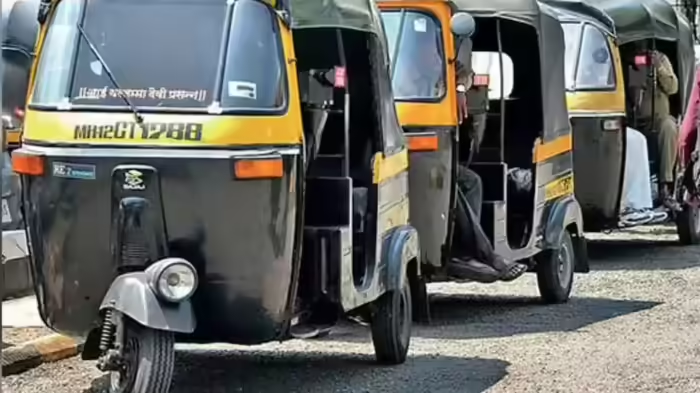
Auto-rickshaws are an inseparable part of India’s transport system—from crowded city streets to narrow village lanes. While they are seen everywhere, one question often goes unnoticed: why are auto-rickshaws designed with three wheels instead of four? The answer lies in a combination of engineering efficiency, cost-effectiveness, fuel economy, and practicality, making the three-wheeled design far superior for Indian conditions.
1. Superior Mobility in Tight Spaces
One of the biggest advantages of a three-wheeled auto-rickshaw is its small turning radius. Unlike four-wheeled vehicles that require more space to turn, auto-rickshaws can maneuver easily through narrow lanes, congested markets, and heavy traffic. In a country like India, where road space is limited and traffic density is high, this compact mobility is a major advantage.
2. Efficient Weight Distribution
Auto-rickshaws follow a tricycle layout—one wheel at the front for steering and two at the rear to carry the engine load, passengers, and luggage. This design ensures balanced weight distribution, keeping the vehicle stable while remaining lightweight. The simplicity of this structure allows for effective load handling without complex engineering.
3. Lower Manufacturing and Maintenance Costs
From an economic standpoint, a three-wheeled vehicle is cheaper to manufacture than a four-wheeler. Fewer wheels mean reduced costs on tyres, rims, axles, suspension components, and other mechanical parts. Additionally, the suspension and drivetrain systems are far simpler, resulting in low maintenance costs. This makes auto-rickshaws affordable for drivers who rely on them as a primary source of income.
4. Better Fuel Efficiency
Auto-rickshaws are designed to provide low-cost transportation, which means fuel efficiency is critical. Their lighter weight puts less strain on the engine, allowing them to deliver excellent mileage even with smaller engines. Compared to four-wheeled vehicles, three-wheelers consume less fuel, making them economically viable for daily commercial use.
5. Easy Handling and Adequate Stability
Contrary to popular belief, three wheels can offer sufficient stability, especially on uneven or rural roads. Just like a three-legged stool is easier to balance than a four-legged one, a three-wheeled auto-rickshaw adapts better to uneven surfaces. Moreover, driving and maintaining an auto-rickshaw requires relatively lower technical skill, making it accessible to a wide range of drivers across urban and rural India.
A Design Perfectly Suited to Indian Roads
The three-wheel design of auto-rickshaws is not a compromise but a well-thought-out solution tailored to India’s road conditions, traffic patterns, and economic realities. From low operating costs and fuel savings to unmatched maneuverability, the humble auto-rickshaw continues to prove why three wheels are not just enough—but better than four.
Discover more from SD NEWS agency
Subscribe to get the latest posts sent to your email.