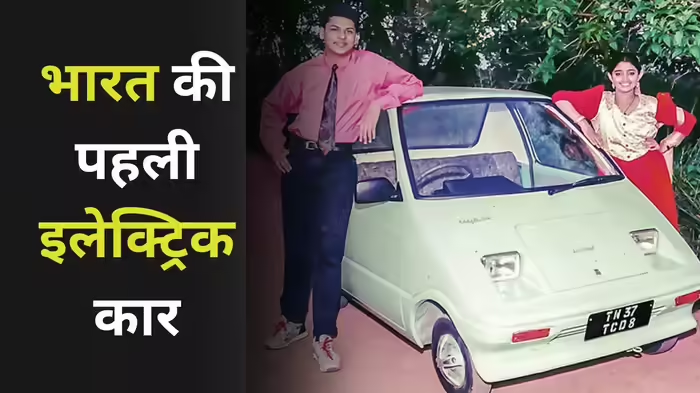
India has a long and fascinating history with electric vehicles (EVs). The country saw its first electric car launched in 1993, but surprisingly, fewer than 100 units were sold. Here’s a look at the journey of EVs in India from then until now.
Today, the Indian market features electric cars across all segments — from hatchbacks to SUVs — and even high-performance electric sports cars that are celebrated for their speed and efficiency. But very few know the story of the very first electric car in India, its features, and why it didn’t catch on at the time.
The Birth of Lovebird
The first electric car in India was named Lovebird. Launched in 1993, it was introduced at the Auto Expo and received appreciation from the government for its innovative concept. Lovebird was developed by AC Current Controls in collaboration with Japan’s Yaskawa Electric and manufactured in Tamil Nadu.
Key Features of Lovebird
Lovebird was a compact two-seater with a rechargeable battery that offered a range of 60 kilometers on a full charge, which took around 8 hours to complete. The car featured a 4-speed gearbox and a reverse gear for easier maneuvering. Despite these innovations, the Lovebird struggled in the market.
Limited Sales and Challenges
Fewer than 100 units of Lovebird were sold. Factors contributing to its limited success included its two-seat capacity, dominance of petrol and diesel vehicles in the market, and the absence of EV charging infrastructure in India at the time. Consequently, Lovebird was discontinued within a few months. However, it played a crucial role in introducing electric mobility to India and showing that cars could run on electricity.
The Rise of Reva
Following Lovebird, Mahindra & Mahindra launched India’s second electric car, the Reva, in 2001. Like Lovebird, Reva was a two-seater, but it gained greater popularity and helped establish the foundation for EV adoption in India. Despite its relative success, the country still lacked robust charging infrastructure in the early 2000s, limiting the growth of EV sales.
Today, with advancements in battery technology, wider charging networks, and a growing focus on sustainability, India is witnessing a new era of electric vehicles, fulfilling the vision first hinted at by Lovebird over three decades ago.
Discover more from SD NEWS agency
Subscribe to get the latest posts sent to your email.